REVIEW · VIESTE
Fishing Experience – Molinella Trabucco
Book on Viator →Operated by Esperienza di pesca sul Trabucco · Bookable on Viator
A centuries-old fishing machine hums at dusk. You’ll watch and help on a trabucco in the Gargano, where traditional fishing is kept alive with living demonstrations and real local know-how. I love the hands-on part, where you’ll work the winches and help pull the nets, and I also like the simple mid-experience aperitivo-style break with rustic pizza, taralli, wine, olives, and water.
One catch: this is weather-dependent, and traditional fishing success isn’t guaranteed. On a windy or rough evening, you might not see many fish, and there’s also a small logistics risk if things go wrong on a given schedule—so I suggest arriving a bit early and having your booking details ready.
In This Review
- Key things that make Molinella Trabucco different
- Why a Trabucco Still Pulls You In at Dusk
- Your 50-Minute Plan: How the Evening Moves
- Meeting at the Trabucco of MolineBaia (and Why Early Helps)
- The Hands-On Part: Winches, Nets, and the Work Behind It
- Meet the Guide Team: Gianni, Peppino, and Natale
- The Short Aperitivo Break: Rustic Food, Not a Detour
- Fishing Success Is Weather-Linked, So Go for the Process
- Price and Value: What $22.83 Really Covers
- Who This Experience Fits Best (and Who Should Think Twice)
- Weather and Timing: The Two Things You Can’t Control
- Practical Tips to Get the Most From the Experience
- Should You Book the Molinella Trabucco Fishing Experience?
- FAQ
- How long is the Molinella Trabucco fishing experience?
- Where does the tour start?
- What time does the experience begin?
- Is the tour in English?
- What food and drinks are included?
- What happens if the weather is poor?
Key things that make Molinella Trabucco different
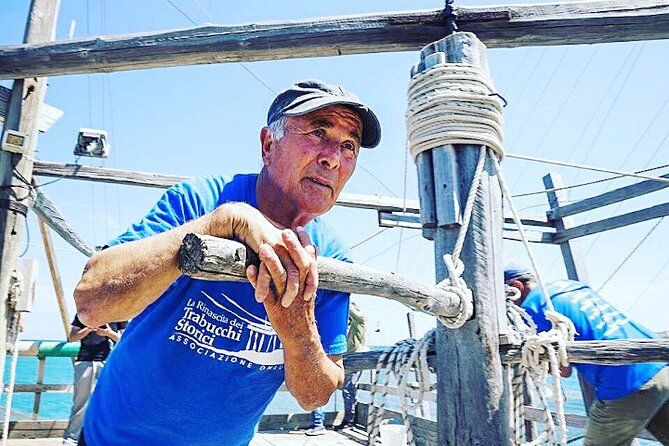
- You participate, not just watch: you can help operate winches and assist with the nets.
- No modern fishing tech: the whole method is presented as it was, without engines or electronic gear.
- Real local “masters” in charge: the guide team includes Gianni plus masters Peppino and Natale.
- The break is part of the experience: you’ll get rustic pizza, taralli, wine, olives, and water between fishing turns.
- It’s tied to conservation: proceeds support conservation and reconstruction of trebuchets/trabucchi.
- Short but focused: about 50 minutes means it’s doable even on a busy Vieste evening.
Why a Trabucco Still Pulls You In at Dusk
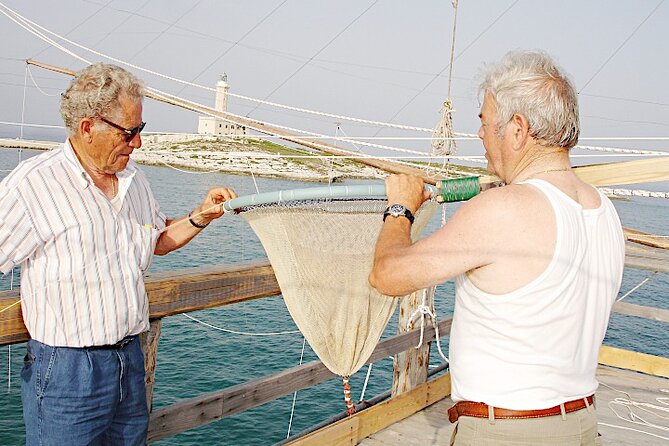
If you’re in Vieste and you want something more meaningful than another quick boat ride, this is a strong choice. The Gargano trabucchi (historic fishing platforms) are centuries old and recognized as part of the Puglia region’s cultural heritage. They were once the backbone of the local fishing economy, long before engines and electronics changed how fishing is done.
What I like about the Molinella setting is that it doesn’t feel like a museum. You’re standing where fishing used to happen, and you’re learning how the system works through real human effort: rope, leverage, timing, and teamwork. Even in a short session, it gives you that sense of cause and effect—how a small action on land connects to a big result out at sea.
And if you like practical history (the kind that includes tools, hands-on work, and a story for every part), this one lands well.
You can also read our reviews of more tours and experiences in Vieste.
Your 50-Minute Plan: How the Evening Moves
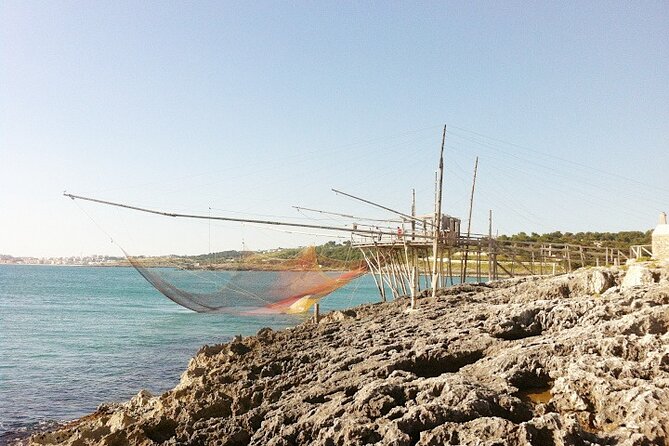
This experience runs for about 50 minutes, starting at 6:00 pm, and ends back at the meeting point. That timing matters. Late afternoon light is often better for watching, and the evening mood fits the whole idea of traditional fishing: steady work, a little tension, and then the moment when you see what you’ve managed to bring up.
Expect a straightforward flow:
- A guided explanation of how the trabucco system is built and operated
- Time where you actively help with the work (winches, pulling nets, and fish collection, when possible)
- A short refreshment moment between fishing turns
- Wrapping up with more context about why these historic platforms matter
Because it’s relatively brief and private (only your group), you’re not stuck listening through long speeches. The pace suits families, couples, and anyone who’d rather do something than just stand and take photos.
Meeting at the Trabucco of MolineBaia (and Why Early Helps)
You’ll meet at the Trabucco of MolineBaia, in the Molinella area of Vieste (address: 71019 Vieste FG, Italy). The activity ends where it starts, so you don’t need to figure out extra transportation or hop to a second spot.
I’d treat a meeting time like this seriously. One review experience described a situation where people waited and no one showed up, making it hard to request a refund later. I can’t fix that from my side, but you can reduce your risk: arrive a bit early, double-check you’re at the right trabucco location, and keep your confirmation details accessible on your phone.
The Hands-On Part: Winches, Nets, and the Work Behind It
This is not a passive “look and listen” program. The whole point is that you’ll be part of the show.
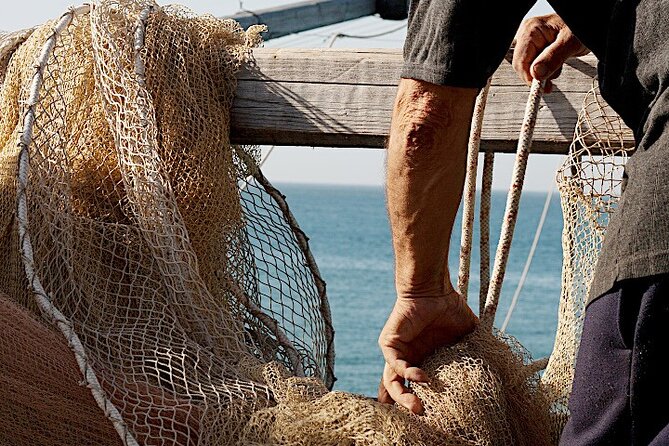
On the Molinella trabucco, you’ll help operate the winches, pull the nets, and (when the moment allows) collect the fish. That matters because you quickly learn that trabucco fishing isn’t magic. It’s engineering plus muscle plus timing. When you pull, you feel the weight and resistance. When you turn the winch, you learn how much effort is required just to reach the right rhythm.
It’s also a lesson in human ingenuity. The explanation of these historic methods focuses on what fishermen did without modern tools like engines, eco-sounders, or computers. In other words, people relied on the platform, their experience, and careful coordination.
In the better moments of the evening, you’ll see how the team works like a unit: one person does the timing, another handles rope control, and everyone follows the guide’s cues. The result feels real and grounded. Not a reenactment for show—more like a working tradition being demonstrated with care.
Meet the Guide Team: Gianni, Peppino, and Natale
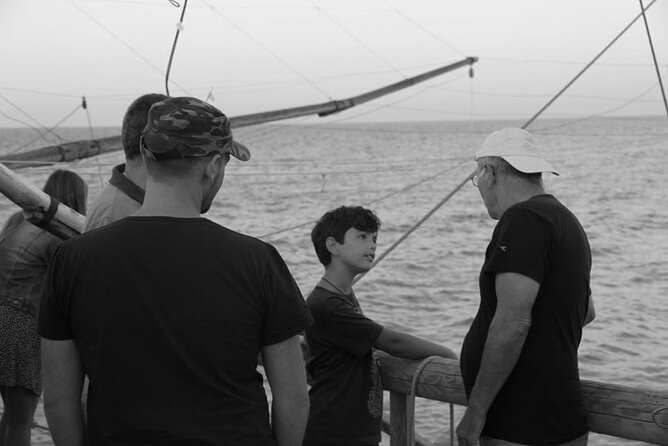
The experience is led by a guide, and the working “masters” are a big part of why it feels authentic. In the stories you’ll hear, names come up—Gianni as the guide, and the masters Peppino and Natale—who help run the hands-on portion.
That matters for you because it changes the tone. When the people explaining things are also the ones operating the system, the information sticks. You’re not hearing a script. You’re seeing how knowledge is applied: how to handle the winches, how to pull the net efficiently, and how the team reads the situation as it develops.
If you’re curious about how traditions survive, this team format is exactly how you want it to be done.
The Short Aperitivo Break: Rustic Food, Not a Detour
Between fishing turns, you’ll get a small refreshment: rustic pizza, taralli, wine, olives, and water. It’s simple food, but it’s also smart timing. You’re catching your breath, chatting, and soaking in the explanations without rushing straight back into the physical part.
This break is also where the experience becomes more human. You get a few minutes to ask questions and hear extra context about the trabucco, the work, and why this association supports conservation.
If you’re traveling with children, this kind of pause helps. It keeps the evening from feeling like nonstop standing and listening. If you’re traveling as a couple, it adds a relaxed social moment that doesn’t require leaving the site.
Fishing Success Is Weather-Linked, So Go for the Process
Here’s the practical truth: traditional fishing depends on conditions. If the sea or wind makes the work harder, the catch can be smaller than you’d hope. One evening might produce lots of fish; another might produce just a few.
That’s not the organizer’s fault—it’s the reality of fishing, especially when you’re using the method as it historically worked. My advice: treat this as a cultural and practical demonstration first, with fishing as a bonus when conditions cooperate.
If you’re the type who needs a guaranteed payoff (for example, you only want this if you’re sure you’ll catch fish), you may feel disappointed. But if you enjoy understanding a working tool system and seeing it operated by real people, you’ll still get a lot out of it—even when the catch is modest.
Price and Value: What $22.83 Really Covers
At $22.83 per person, this sits in the “small-ticket but memorable” category. You’re paying for:
- A guided cultural explanation of historic trabucco fishing
- Hands-on participation with winches and nets
- A food-and-drink refreshment break
- Support for conservation and reconstruction of trabucco structures
There’s also a sustainability angle. The experience is connected to an association focused on the conservation of trabucco heritage. That means the money isn’t just for a one-time performance. It contributes to keeping the platforms maintained and rebuilding parts when needed.
You might also see the price listed differently in local contexts (some accounts reference around 18€). Either way, the value is tied to the same core idea: short, focused, and hands-on, with food included.
Who This Experience Fits Best (and Who Should Think Twice)
This is a good fit if you want:
- An authentic culture stop in Vieste’s Gargano area
- A short evening activity that doesn’t require lots of planning
- Something hands-on rather than purely observational
- Family-friendly participation, with kids able to join in the activity
It may be less satisfying if you:
- Want a guaranteed catch of fish
- Are sensitive to being outdoors and working around sea conditions
- Prefer high-comfort “sit and watch” experiences only
Also consider timing. It starts at 6 pm, so you’ll want to plan dinner later, or you’ll want to stay flexible. You’ll get refreshments during the experience, but it’s not presented as a full meal.
Weather and Timing: The Two Things You Can’t Control
Two factors can shape your evening:
- Good weather is required for the experience
- Even with decent conditions, fishing results can vary
If weather forces changes, you should expect the provider to offer a different date or a full refund. That’s the right kind of safety net for a seasonal, outdoor activity.
Still, this is the Mediterranean in shoulder-season conditions sometimes. Bring layers and be ready for wind near the water. Even if the air isn’t cold, breeze changes how “comfortable” outdoor work feels.
Practical Tips to Get the Most From the Experience
You’ll get more out of it if you go in prepared for participation:
- Wear footwear you can trust on uneven ground and near rope work
- Dress for evening breeze; light layers help
- Have your confirmation info on your phone, ready to show
- If you’re traveling with kids, set expectations early: this is working tradition, not a guaranteed fishing haul
Most people can participate, and service animals are allowed, so the program is designed to be inclusive in terms of participation.
Should You Book the Molinella Trabucco Fishing Experience?
Yes, if you want an evening that feels local, physical, and meaningful. The strongest reasons to book are the hands-on winch-and-net participation, the clear explanation of how trabucco fishing works without modern tech, and the way the short aperitivo break turns it into something social rather than rushed.
Think twice if your main goal is guaranteed fish in the bucket. This isn’t that kind of experience. It’s a cultural and practical demonstration, and the catch is tied to conditions.
If you’re choosing between a generic activity and something tied directly to Gargano heritage, Molinella has the advantage of doing more than telling you about history. It lets you work the mechanism and understand the effort behind it—exactly the kind of “why this mattered” experience that makes a trip stick with you after you leave Vieste.
FAQ
How long is the Molinella Trabucco fishing experience?
It lasts about 50 minutes.
Where does the tour start?
You meet at the Trabucco of MolineBaia, Baia di Molinella, 71019 Vieste FG, Italy.
What time does the experience begin?
The start time is 6:00 pm.
Is the tour in English?
Yes, the experience is offered in English.
What food and drinks are included?
Between fishing turns, you’ll be offered rustic pizza, taralli, wine, olives, and water.
What happens if the weather is poor?
The experience requires good weather. If it’s canceled due to poor weather, you’ll be offered a different date or a full refund.