
REVIEW · KOCHI
Fort Kochi & Chinese Fishing Nets Private Walking Tour
Book on GetYourGuide →Operated by Carnival Tours Kochi · Bookable on GetYourGuide
Fort Kochi feels like a living postcard of trade. In just 3 hours, I love how this private walking tour stitches together the seaside work of the Chinese Fishing Nets, the big-name old churches like St. Francis (1503), and the quieter side streets of Jew Town. You’ll also spend real time with places where Portuguese and Dutch influence shows up in stone and stories, not just on signs. One drawback to plan around: the route is mostly walking and includes worship sites, so it’s not recommended if you have limited mobility, and you’ll need clothes that cover shoulders and knees.
The value is solid for what you get. You’re paying about $30 per person for an English-speaking guide, tuk-tuk rides between landmark areas, and entrance fees, which saves you hassle when you’re short on time in Kochi. Also, I really liked the guide factor—Babu, mentioned in a couple of bookings, showed up with deep context and could steer the tour toward what people cared about, whether that meant the historic sites or the wider culture around them.
In This Review
- Key moments I’d book this tour for
- Getting oriented in Fort Kochi without wasting time
- Portuguese-era and Dutch-era churches you can actually picture
- The Chinese Fishing Nets: more than a photo stop
- A quick tuk-tuk to Matancherry and Jew Town
- Pardesi Synagogue: old, active, and worth respecting
- Jew Town shopping lanes: antiques and spice browsing
- What the private format changes (and why it matters)
- Price and value: why $30 can work here
- Logistics that can make or break your afternoon
- Who should book this tour
- Should you book Fort Kochi & Chinese Fishing Nets Private Walking Tour?
- FAQ
- How long is the Fort Kochi walking tour?
- What does the tour include?
- Is the group private?
- Where do I meet the guide?
- Can I get hotel pickup and drop-off?
- What places will we visit?
- Are there any days when some sites are closed?
- Is there a dress code?
- Can I take photos inside all monuments and churches?
- Is the tour suitable for cruise ship passengers?
Key moments I’d book this tour for
- Chinese Fishing Nets and the beach-side mechanism that makes this method work
- St. Francis Church (1503) and the story of Vasco da Gama’s early burial there
- Portuguese and Dutch churches plus murals and paintings you’d likely miss alone
- Matancherry Palace and its Portuguese connection, plus Hindu-epic murals
- Pardesi Synagogue as an active Jewish site with seriously old roots
- Jew Town shopping streets for antique and spice browsing at walking pace
Getting oriented in Fort Kochi without wasting time

Meeting up is straightforward. You’ll start at Carnival Tours & Travels on Princess Street, near Shop N Save and opposite Block Prints. I’d arrive 5 minutes early so you’re not rushing before you begin.
The biggest advantage of a private format here is focus. Fort Kochi can be confusing for self-guided exploring because the area mixes waterfront views, church lanes, and short hops into Matancherry and Jew Town. With a local guide, you get the walking rhythm and the right context fast—so you’re not just collecting photos, you’re understanding why these buildings sit where they do.
Even better: there are tuk-tuk rides within the landmark areas. That matters because you want energy for the churches and synagogue interiors, not to spend your whole afternoon walking back and forth.
Portuguese-era and Dutch-era churches you can actually picture

This tour’s heart is the church-and-murals route around Fort Kochi. You’ll visit centuries-old sites built by Portuguese and Dutch settlers, which is a big deal here because the architecture and artwork don’t feel like generic “tourist churches.” They’re tied to how European visitors and trade networks interacted with Kerala over centuries.
You’ll start at St. Francis Church, built in 1503. It’s known as the oldest church in India, and the story adds extra weight: Vasco da Gama, one of the first European explorers to discover the sea route to India, was initially buried here before his remains were taken to Lisbon. Even if you know the name already, hearing it in the church setting makes it click.
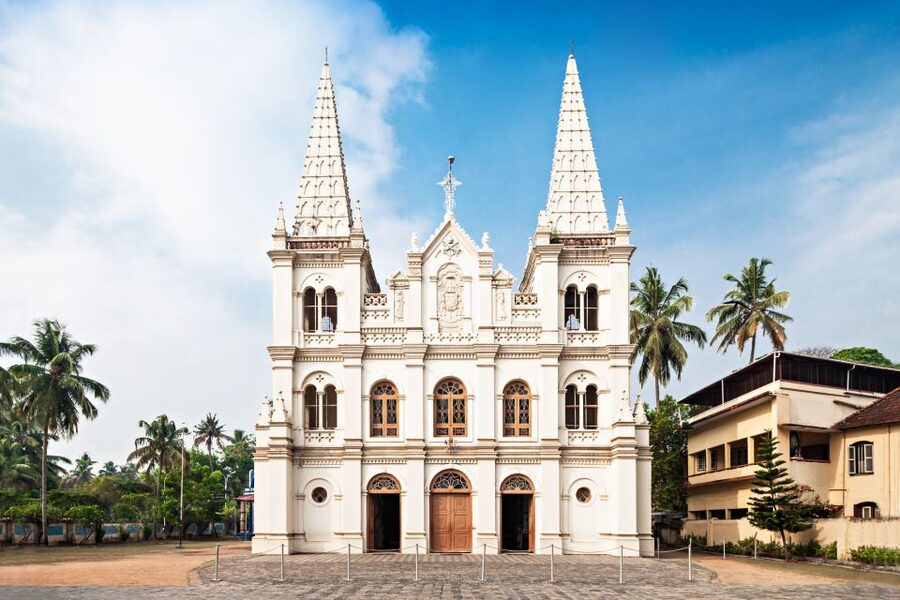
Next up is Santa Cruz Cathedral Basilica from the 1500s. I like this stop because it’s not only about dates—it’s about what’s inside. You’ll see paintings and murals inside the basilica, and that visual storytelling is a big part of why you came to Fort Kochi in the first place. Do keep your expectations flexible: photography may not be permitted inside some monuments or churches, so ask your guide before taking pictures.
One practical note: you’ll be visiting places of worship. You’ll want clothing that covers your shoulders and knees. It’s not a style test; it’s a key to entry and comfort.
The Chinese Fishing Nets: more than a photo stop

Then you’ll hit one of Fort Kochi’s most recognizable scenes: the Chinese Fishing Nets. These traditional nets are operated from the beach, and your guide will explain the mechanism—so you’re not just looking at a “cool structure,” you’re seeing how the system works.
This is one of my favorite parts of the tour because it connects history to daily life. Nets like these aren’t museum artifacts; they’re tied to work rhythms along the coast. Watching them with guidance turns the scene into something you can understand in minutes.
One small planning tip: bring water and comfortable shoes, because even when you’re watching from a good vantage point, you’ll still move along uneven ground. The tour is short, so you’ll feel every step.
A quick tuk-tuk to Matancherry and Jew Town
After the Fort Kochi highlights, you’ll take a brief tuk-tuk ride to Matancherry and Jew Town. This short transport break keeps the day from turning into one long shuffle, especially if you’re hoping to spend more time looking closely at interiors and shop displays.
Matancherry is where the Portuguese connection gets very tangible. You’ll visit Matancherry Palace, which was gifted to the King of Kochi by the Portuguese. What I like about this stop is the art: the palace is home to beautiful murals from Hindu epics. It’s a visual bridge between European influence and local storytelling traditions, and it helps explain why Kerala’s coastal cities developed in this layered way.
You should also know that specific days can affect access. The Dutch Palace and the Jewish Synagogue are closed on Fridays, Saturdays, and Jewish holidays. If your dates land on those days, your guide will handle the best available flow, but it’s worth planning around closure if you’re set on seeing both interiors.
Pardesi Synagogue: old, active, and worth respecting
Jew Town is where the atmosphere shifts to shops, signage, and the sense that people still live this history. Your highlight here is the Pardesi Synagogue, one of the oldest active Jewish places of worship in the world.
I find this stop more powerful with a guide. The synagogue is ornate, and your guide can help you notice details without you having to guess what matters. You’ll spend time walking around the interiors, and because it’s an active worship space, you’ll want to keep your voice low and follow any guidance on what’s allowed.
If you’re into architecture, this is also a good place to slow down. A private walk means you’re not competing for attention from a packed group, so you can ask questions and absorb what’s in front of you.
Jew Town shopping lanes: antiques and spice browsing
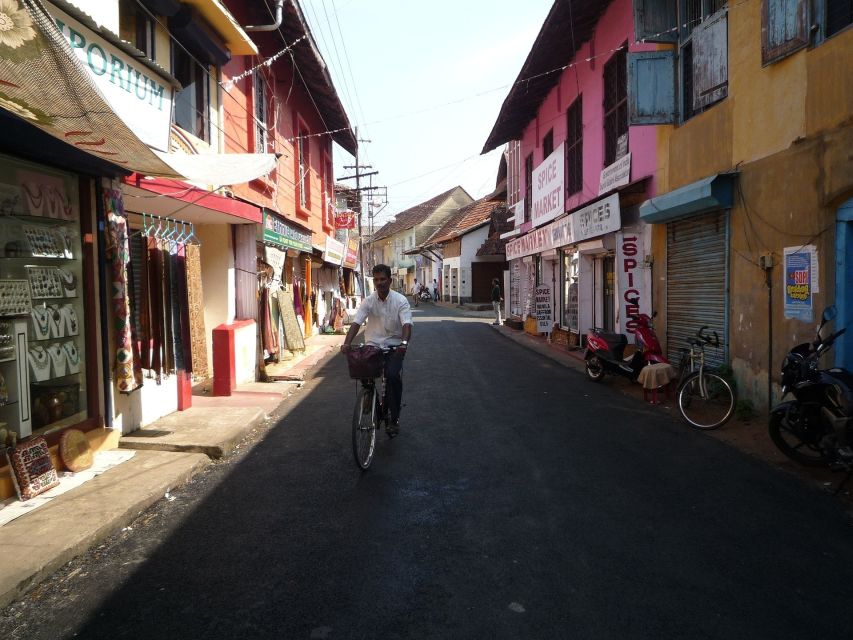
After the synagogue, the tour shifts into street time. You’ll walk around the antique and spice shops in Jew Town and browse at an unhurried pace.
This is where you get to do the practical travel thing: pick up spices you’ll actually cook with, or browse for small antiques as a reminder of the place. Your guide can help you navigate what’s typical in the area, but you still get to decide what’s worth your money—no hard sales pitch built into the tour.
Just remember: souvenirs aren’t included. You can treat this like a window-shopping section, or use it as your last-chance stop before you head back to your hotel.
What the private format changes (and why it matters)
A lot of Fort Kochi tours are “see a lot, feel rushed.” This one is built around a private group format, which changes the experience in a few noticeable ways.
First, you can move at a pace that fits your interests. Babu, the guide name mentioned in a couple of bookings, is noted for being tuned into what people wanted most. That’s a big deal when you’re balancing churches, coastal views, palace murals, and a synagogue interior all in one afternoon.
Second, you get less backtracking. The area has multiple “clusters,” and the guide helps you connect them logically. That saves energy for the best moments—especially when you’re standing still for views like the Chinese Fishing Nets.
Third, you avoid the guesswork on practical rules. You’ll be guided on modest dress and photo expectations inside monuments or churches. That alone can prevent awkward pauses.
Price and value: why $30 can work here
At $30 per person for a 3-hour tour, the price can feel very fair—mainly because the tour includes a few things that add up fast on your own.
Here’s what you’re getting for your money:
- An English-speaking guide
- Tuk-tuk rides within the landmark areas
- Entrance fees
If you were to do this independently, you’d likely pay for transport between zones and sort out entry tickets while also trying to understand what you’re looking at. In a short visit, a guided “hit list” can be the smarter play.
The trade-off is that it’s still a walking-heavy route. If you have limited mobility, the tour notes say it’s not recommended—so in that case, you’d want to choose a different style of Kochi sightseeing.
Logistics that can make or break your afternoon
This is a short tour, so a little planning pays off.
Wear comfortable shoes. Fort Kochi sidewalks and lanes can be uneven, and you’ll be on your feet through church areas, the waterfront zone, and Jew Town streets.
Bring water. You’ll also spend time in warm weather conditions common to coastal Kerala, and your schedule is tight enough that waiting for water stops can be annoying.
Plan for modest clothing. Cover shoulders and knees at worship sites. It’s an easy fix if you know ahead of time—then you won’t scramble at the last minute.
Also, keep your phone camera ready but respect rules. Photography may not be permitted inside some monuments or churches, and you’ll want to ask your guide before you start snapping.
Who should book this tour
This tour is a great fit if you want:
- A focused introduction to Fort Kochi’s Portuguese, Dutch, and Jewish-era heritage
- A guided route through churches and interiors you might otherwise struggle to interpret
- A short, efficient afternoon plan that includes both waterfront and street scenes
It’s also a strong choice if you care about history but prefer storytelling over reading walls of text. The best part is that the route connects famous sites (like St. Francis Church) with lived-in places (like Jew Town shopping streets and an active synagogue).
If you’re traveling with mobility limitations, skip this one. It’s not recommended for limited mobility, and that matters for comfort.
Should you book Fort Kochi & Chinese Fishing Nets Private Walking Tour?
If you’re deciding between a free-form wander and a planned afternoon, I’d lean toward booking this tour—especially if you want the Chinese Fishing Nets plus the church-and-synagogue layer in one go. The pricing works because entrance fees and transportation between landmark clusters are included, and the private guide makes it easier to ask questions without feeling rushed.
Book it if:
- You want context while you sightsee
- You like a route with multiple cultural layers, not just one “big sight”
- You value a guide who can respond to your interests (Babu is specifically highlighted in past bookings)
Skip or switch tours if:
- You have mobility constraints
- Your dates fall on periods when the synagogue and Dutch Palace are closed (Fridays, Saturdays, and Jewish holidays)
If your goal is to understand Fort Kochi quickly and respectfully—and still have time to enjoy the streets afterward—this is a solid way to spend your afternoon.
FAQ
How long is the Fort Kochi walking tour?
The tour lasts 3 hours.
What does the tour include?
It includes an English-speaking guide, tuktuk rides within landmarks, and entrance fees.
Is the group private?
Yes, it’s a private group.
Where do I meet the guide?
You meet at Carnival Tours & Travels, Princess Street, near Shop N Save and opposite Block Prints. Arrive at least 5 minutes early.
Can I get hotel pickup and drop-off?
Hotel pickup and drop-off from Kochi and Ernakulam are available if you select that option. The exact pickup time is confirmed after booking based on your location.
What places will we visit?
You’ll visit Fort Kochi highlights including St. Francis Church (1503), Santa Cruz Cathedral Basilica, the Chinese Fishing Nets, Matancherry Palace, the Pardesi Synagogue, and time in Jew Town for browsing shops.
Are there any days when some sites are closed?
Yes. The Jewish Synagogue and Dutch Palace are closed on Fridays, Saturdays, and Jewish holidays.
Is there a dress code?
You should wear clothes that cover your shoulders and knees because the tour visits places of worship.
Can I take photos inside all monuments and churches?
Photography may not be permitted inside some monuments or churches. Ask your guide before taking photos.
Is the tour suitable for cruise ship passengers?
No. This tour won’t be provided to cruise ship passengers.