REVIEW · INARI
Muotkantunturi Park, Inari – Ice fishing and a ride on a Lappish sleigh
Book on GetYourGuide →Operated by Muotkan Ruoktu Tunturikyla · Bookable on GetYourGuide
The ice under your feet matters here. This 2-hour Muotkantunturi Park experience pairs a traditional wooden sleigh ride with hands-on ice fishing in a preserved natural area near Inari. You also get Sami-style warmth after the lines come out: coffee, local cookies, and cooking your catch over a wood fire.
I love two things: the way the day feels gently paced for pretty much everyone, and the fact that you’re not just watching. With a small group (up to 8), a guide supports you step by step, then you sit on reindeer skins and try fishing the traditional way on a frozen lake. Mathilde’s energy shows up in the experience too, with extra warmth under the Arctic sky.
One thing to consider: your luck with fish can depend on conditions and timing. If the fish are less active (for example, when it gets darker), your catch may be harder, even when you do everything right.
In This Review
- Key things worth knowing before you go
- Muotkan Ruoktu: where this sleigh-and-fishing day actually starts
- The Muotkatunturi sleigh ride: quiet travel through preserved wilderness
- Getting to the frozen lake: what happens before the first hole
- Arctic ice fishing basics: the traditional “sit, wait, learn” rhythm
- Fishing gear, outerwear, and the comfort checklist that keeps you happy
- Coffee, cookies, and Sami culture: what you’ll learn and what you might want more of
- The kota: cooking your catch over a wood fire
- Small-group format (up to 8): why the group size changes the experience
- Timing, weather, and why Lapland can change the plan
- Price and value: is $117 per person worth it?
- Who should book this ice fishing sleigh tour near Inari?
- Should you book? My practical verdict
- FAQ
- Where is the meeting point?
- How long is the tour?
- What’s included with ice fishing?
- Will we get warm food or drinks?
- Do I need my own winter clothing?
- Is the activity difficult or does it require athletic ability?
- How many people are in the group?
- What languages are available for the guide?
- Is cancellation possible due to weather?
Key things worth knowing before you go
- Small group (max 8): more calm on the lake and better hands-on help with your gear
- Muotkatunturi Nature Park: preserved wilderness with no light pollution and real Arctic silence
- Traditional method: you pierce the ice, sit on reindeer skins, and fish with simple lines
- Kota cooking with a wood fire: your catch can become part of the story, not just a souvenir
- Sleigh transport on Sami-style routes: a snow-forest ride through tundra country, not a quick photo stop
Muotkan Ruoktu: where this sleigh-and-fishing day actually starts
This experience begins in Muotkan Ruoktu, right on Route 92, the road toward Nordkapp. That’s useful because you’re not hunting for hidden turnoffs in the dark—free parking is available on site, and the activity starts by the restaurant reception area.
When you arrive, you check in at the reception. If it’s brutally cold outside, you can wait inside the warm restaurant until departure, which is a small detail that makes a big difference when Lapland weather turns.
The Muotkatunturi sleigh ride: quiet travel through preserved wilderness
You start the day on a traditional wooden sleigh, the kind Sami families have used to reach winter places across the tundra. You’re pulled through snow-covered forest and valleys in the Muotkatunturi Nature Park, at the foot of the “Tunturi” hills.
This isn’t a race. The value of the sleigh ride is how it changes your pace—no engines, no crowds, just boreal quiet and the sense that you’ve left the map behind. If you like winter travel that feels local and slow, this part sets the tone.
And because the region has no light pollution or roads in the activity area, the sky can get properly dramatic. On clear return rides, you may even catch Northern Lights luck, but that’s never guaranteed, so treat it as a bonus.
Getting to the frozen lake: what happens before the first hole
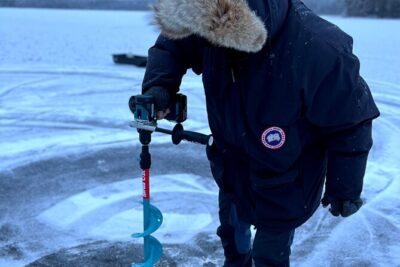
Once you arrive at the frozen lake, the “adventure” part becomes simple and practical. You learn how to pierce the ice, then you settle in with support from your guide.
You’ll also use the gear and setup provided, including reindeer skins to sit on while you fish. That matters more than you might think, because warmth and comfort are what keep you steady when you’re waiting for bites.
You’re not thrown into it. The guide gives tips for ice fishing techniques and stays with you at your pace, which is a big deal if you’ve never done this before (or if you’re traveling with kids).
Arctic ice fishing basics: the traditional “sit, wait, learn” rhythm
This is real ice fishing, not a quick demo. You use a small colorful rod and a shiny hook, then you practice patience the way traditional winter fishers do.
Here’s the part that helps your expectations: biting isn’t a production line. You’re learning how to read your moment—set up cleanly, keep steady, and give the line time to do its work in cold water under ice.
One practical tip from the reality of the activity: when conditions are right, you can get your catch, but the fish can be less active at certain times. In darker periods, it may be harder to land fish even if everything is set up properly, so don’t treat catch success as the only measure of value.
Fishing gear, outerwear, and the comfort checklist that keeps you happy
The tour includes fishing gear such as rods and hooks, plus an auger and the reindeer skins for sitting. You also get cold-weather clothing, so you’re not trying to build a full winter kit from scratch.
Still, you should come ready underneath. The tour notes that you should bring your own base layers, and what to aim for is simple: warm thermal underwear, fleece warmth, and warm socks. For shoes, choose something winter-appropriate—your feet are the first thing to complain when you stand still.
The activity itself is described as easy and accessible, with no athletic requirement. That doesn’t mean you’ll be warm in flip-flops, but it does mean you can participate comfortably if you dress for the cold.
Coffee, cookies, and Sami culture: what you’ll learn and what you might want more of
You’re not just fishing in silence. The day includes coffee, tea, and local cookies, plus guidance about Sami traditions and life in the Arctic.
This cultural layer is part of why the experience feels grounded instead of theme-park-ish. You’ll hear why the sleigh route and winter practices matter, and you’ll get context around the people and daily life connected to this region.
One consideration: if you want deep Sami history and culture talk, plan to ask questions. Some visitors may find they need to prompt more conversation to get the level of cultural detail they want, especially in a 2-hour window.
Guide energy matters here too. In one example, a guide named Mathilde brought standout enthusiasm, adding extra warmth to the experience—so if you like that human touch, you’re likely to appreciate the group’s tone.
The kota: cooking your catch over a wood fire
If you catch something, you can prepare it in a traditional kota. This is one of those details that turns a winter activity into a full memory: you’re not only catching fish, you’re cooking it over a wood fire in a sheltered, traditional setting.
Even if you don’t land fish, the kota moment still usually feels special because it breaks the cold into something cozy. It also ties the fishing back into everyday Arctic logic—food, warmth, and time outdoors without rushing.
Small-group format (up to 8): why the group size changes the experience
This tour is limited to 8 participants, which is a practical choice for ice fishing. With a smaller group, you get:
- more room at the lake setup
- better chances your questions get answered fast
- less time waiting around
That matters because ice fishing is mostly waiting plus small technique adjustments. A crowded group can turn that into boredom; a small group keeps it steady, friendly, and more controllable when the weather shifts.
It also helps with the overall vibe. The experience is described as gentle and family-friendly, and the group size supports that. Couples can keep it romantic without feeling like they’re stuck in a crowd, and kids can stay engaged without being overwhelmed.
Timing, weather, and why Lapland can change the plan
Lapland weather can be unpredictable. If conditions are extreme, the tour may be modified or canceled with a full refund, so you’re not gambling your whole trip on one rigid schedule.
In practice, that means you should book with some flexibility in your itinerary. Also, treat the day as a winter experience first, not a guaranteed fish buffet. You’re going for the process: the sleigh, the ice fishing setup, and the calm of the frozen lake.
When the sky cooperates, you may also see the Northern Lights on the way back. Your odds depend on the season and conditions, but the area’s lack of light pollution gives you the best chance available in this kind of outing.
Price and value: is $117 per person worth it?
At about $117 per person for a 2-hour tour, the price is fair only if you value what’s included. You’re not just paying for a guide; you’re paying for:
- traditional sleigh transport
- ice fishing gear and the setup help
- cold-weather clothing
- coffee, tea, and local cookies
- guidance with Sami traditions
- the option to cook your catch in a kota
If you were to build your own ice fishing day, you’d spend money and time on equipment, transportation, and local know-how. This tour compresses all of it into a short, well-supported experience—especially useful if you’re in the Far North and don’t want to waste a half-day figuring out logistics.
So here’s the honest value test: if you want hands-on winter activities with small-group support, this makes sense. If you only care about catching fish above all else, you might feel the uncertainty more than you’d like.
Who should book this ice fishing sleigh tour near Inari?
This fits best if you want a more authentic Far North experience without heavy effort. It’s a great match for:
- couples who want a memorable winter “day story”
- families with kids who want something easy and guided
- solo travelers who like meeting friendly people in a small setting
- anyone who wants local winter life beyond Northern highlights
If you’re craving a long, lecture-style cultural immersion, you may need extra conversations beyond the basic Sami context shared during the tour. And if you’re coming mainly for guaranteed fish, bring realistic expectations about bites and timing.
Should you book? My practical verdict
Book it if you’re excited by the combination of traditional sleigh travel, real ice fishing practice, and warm after-time in a kota. The small-group size and included gear make the price feel more “earned” than many winter tours where you end up doing less.
Skip or rethink it only if you know you’ll be disappointed by uncertain fishing results. In Lapland, nature runs the schedule. If you come for the calm, the technique, and the culture-meets-warmth rhythm, you’re likely to leave satisfied.
FAQ
Where is the meeting point?
The meeting point is Muotkan Ruoktu, located right on Route 92 (the road to Nordkapp). You check in at the restaurant reception area.
How long is the tour?
The experience lasts 2 hours.
What’s included with ice fishing?
Ice fishing gear is included, including rods, hooks, an auger, and reindeer skins, plus tips and personalized support for technique.
Will we get warm food or drinks?
Yes. The tour includes coffee, tea, and local cookies, and you can prepare your catch in a traditional kota.
Do I need my own winter clothing?
You should bring warm base layers, but the tour provides outerwear and cold-weather clothing for the activity.
Is the activity difficult or does it require athletic ability?
No. It’s described as easy and accessible, including for families with kids. You don’t need to be athletic.
How many people are in the group?
It’s a small group, limited to 8 participants.
What languages are available for the guide?
The live tour guide languages are French, English, Polish, Spanish, and Italian.
Is cancellation possible due to weather?
Yes. If conditions are extreme, the activity may be modified or canceled, and it includes a full refund if that happens.