REVIEW · FARO
Tuk tuk Tour Tavira Total – 2h00 – Includes Tuna Museum and Fishing Village
Book on Viator →Operated by Maria's Tuk Tuk · Bookable on Viator
Tavira moves at tuk tuk speed. This 2-hour ride pairs 100% electric touring with a guided look at churches, bridges, forts, and the Ria Formosa salt flats, plus a visit to the Tuna Museum in the old fishing village. I love how the route is built for seeing a lot without the heavy walking, and I also like that you get quick “what to look at” context at each stop. One thing to consider: the stops are short, so if you want long photo breaks or deeper time inside churches/museums, you’ll need to plan extra time on your own.
The vibe here is practical and easy to follow. You’ll start at Alto de São Brás, pass major landmarks like Nossa Senhora do Carmo Church and the Roman Bridge, then head out toward the salt flats area before returning through the historic core toward the castle and forts. The guide style matters, and the names I’ve seen highlighted include Lauri and João, with both praised for making the streets make sense fast. A possible drawback is that this tour is designed for a tight circuit, so the best views and the best photo angles may be quick stops rather than long hangouts.
If you’re trying to get your bearings in Tavira, this hits a sweet spot. At $63.38 per person for about two hours, you’re paying for guided routing, transport in a compact vehicle, and included stops like the salt flats and Tuna Museum. The tour is private (only your group), and you can often keep moving even if the day is hot or you’re tired from walking.
In This Review
- Key things to know before you go
- Why a 100% electric tuk tuk works so well in Tavira
- From São Brás to Carmo: the city highlights in the first stretch
- Salt flats and Ria Formosa: the stop that gives context to the whole region
- Old prison, municipal library, and church squares: learning Tavira’s pattern
- Roman Bridge to Castelo: the short stops that still feel worth it
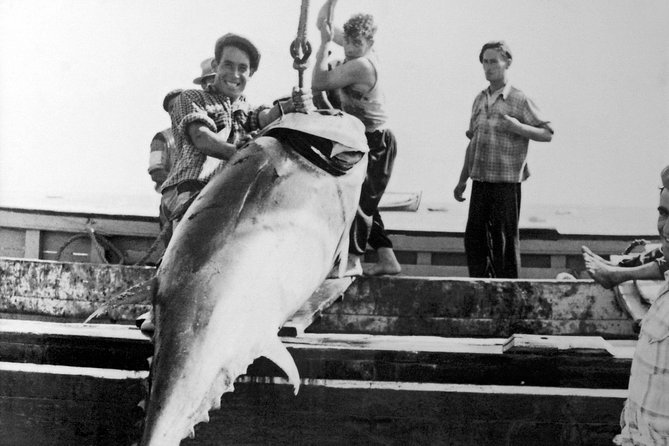
- Tuna Fishing Museum Center: the stop that anchors the whole theme
- Price and time: is $63.38 per person good value?
- Who this tour suits best (and who should think twice)
- What to expect from the guides (based on past experiences)
- Quick practical tips before you ride
- Should you book Tuk tuk Tour Tavira Total?
- FAQ
- How long is the Tuk Tuk Tour Tavira Total?
- What’s included on the tour?
- Is the tour in an electric tuk tuk?
- Does the tour offer pickup?
- Where does the tour start?
- Is the Tuna Museum admission included?
- Can I cancel for a refund?
- Is this tour private?
- Are service animals allowed?
Key things to know before you go
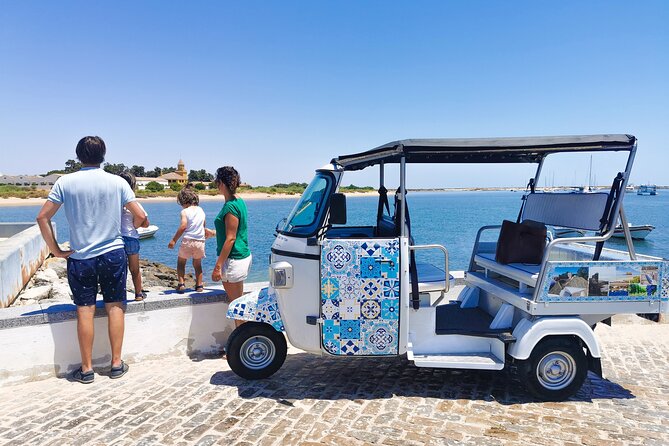
- 100% electric tuk tuk keeps the ride smooth and low-fuss while you cover Tavira’s highlights
- Ria Formosa salt flats stop is built into the circuit, with a free admission ticket listed
- Tuna Museum visit is short but focused, timed as part of the old fishing village area
- Multiple heritage stops include churches, plazas, the Roman Bridge, castle, and forts
- Private tour format means only your group participates, not a big mixed crowd
- Stops with “look here” moments are mixed with some free-ticket entries, so you’re not paying for everything twice
Why a 100% electric tuk tuk works so well in Tavira
Tavira is the kind of town where the best sightseeing is spread out—historic corners, church squares, and then the water-and-salt side of the region. On foot, that can turn into a lot of uphill or repeated backtracking. On a tuk tuk, you keep your energy and still see the main map points.
This tour’s vehicle is specifically described as 100% electric, which matters more than you might think in a small old-town setting: it’s quieter than many options and helps you hear the guide’s explanations as you roll between areas. The ride is also short enough (about 2 hours) to fit into a day without dominating it.
The tone is also designed for real-world sightseeing. You get a mix of driving passes (good for orientation) plus stop-time moments (good for photos and quick learning). I like that balance because you avoid the two extremes: either you’re stuck sitting in one place too long, or you’re whisked by without context.
From São Brás to Carmo: the city highlights in the first stretch
The tour kicks off at R. Gonçalo Velho 7 (Tavira) and begins with a stop at Alto de São Brás, where you can see the chapel of São Brás. Even if you’re not the type to memorize church names, these early stops help you understand the town’s layout and why certain places became important.
Next comes a pass at Nossa Senhora do Carmo Church, identified as the largest church in the city. That’s a big hint about what you should pay attention to as you move: don’t just look for postcard views—look for how churches anchor the street pattern and the town’s center of gravity.
The best part of the opening phase is the “you’re in Tavira now” effect. By the time you’re done with the first few landmarks, you’ll usually know where you are relative to the salt flats direction and where the historic core sits.
Salt flats and Ria Formosa: the stop that gives context to the whole region
After those main-city highlights, the itinerary moves toward salina de Tavira (the salt flats area). There’s a listed stop time of about 5 minutes, with admission ticket free. Short doesn’t mean pointless here. Salt flats are one of those landscapes you can understand better with a quick explanation than with hours of wandering.
Also, this tour doesn’t treat the salt flats as an isolated detour. It ties them to the local identity and to why the fishing village and the Tuna Museum exist where they do.
If you’re the type who takes photos, this is where the lighting often helps. Even if you only get a few minutes, try to capture:
- the line where water meets flat ground,
- any birds you can spot from your viewpoint,
- and the way the area changes as you look toward the sea side.
You won’t get a long birdwatch session here, but the stop is sized to keep the tour moving while still making you feel the “why” behind Tavira’s economy and culture.
Old prison, municipal library, and church squares: learning Tavira’s pattern
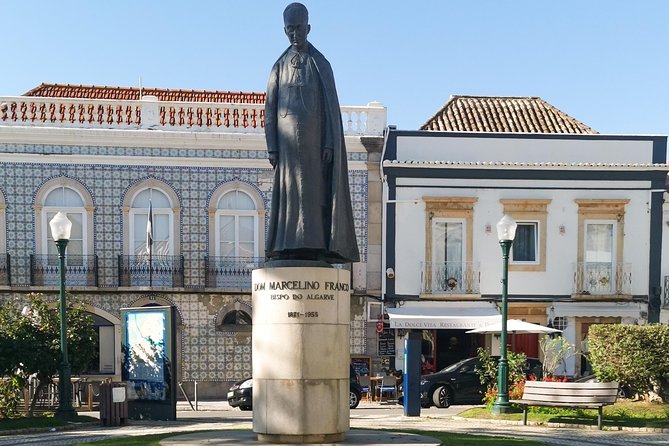
From the salt flats stop, you head back into town with passes like the old prison and Álvaro de Campos Municipal Library. These may sound like background details, but they help connect the dots: Tavira’s historic buildings weren’t just built for decoration—they served practical roles, and they still shape the street feel.
Then the route goes past Ermida de São Sebastião, with another short stop (about 5 minutes, free ticket listed). Small chapels like this are often the places where a guide can point out differences in design or the sort of local traditions that grew around these corners.
After that, you’ll roll through Praca da Republica, the center of Tavira, then see the Roman Bridge of Tavira nearby. The Roman Bridge pass is another orientation moment. If you only experience Tavira from one angle, you can miss how the bridge connects parts of the town. Seeing it in motion on a tuk tuk also helps you understand what’s walkable and what isn’t.
Finally, the tour continues past Church of Santiago de Tavira and Convento da Graça, and later passes by the square of the Church of Santa Maria do Castelo—a place you’ll return to when the route reaches the castle.
Roman Bridge to Castelo: the short stops that still feel worth it
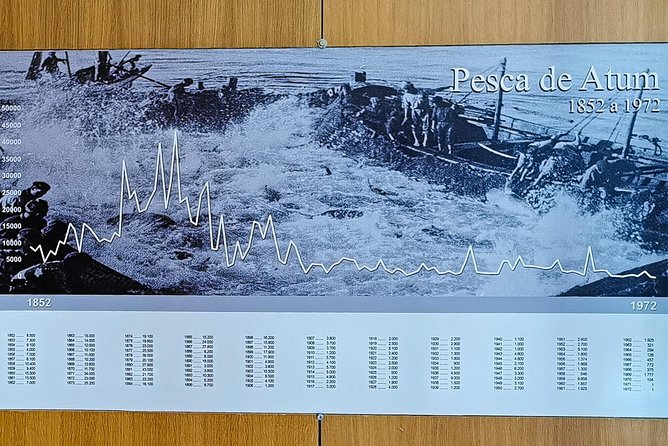
This is where the tour turns from “center streets” into “historic vantage points.” There’s a listed pass by Igreja da Misericórdia where a ticket is part of the Tavira Total tour. That’s a good signal that at least some of what you’ll see is tied to the major religious/cultural institutions, not only viewpoints.
Then you reach Castelo de Tavira with about a 5-minute stop. That’s brief, but it’s the kind of stop that can work well on a time-boxed tour: you get a taste of the castle area and the higher-ground perspective, without turning the experience into a half-day.
After the castle, the itinerary includes a pass at Forte do Rato / Forte de Santo António de Tavira on the way toward the old fishing village. Another short stop (about 5 minutes, free ticket listed). Forts usually look best when you can see their role—how they sit in relation to water routes and how they would have helped protect or watch important areas.
If you’re someone who likes to “understand the town,” these quick fort-and-castle moments pay off because the guide’s explanation helps you read the scenery instead of just staring at it.
Tuna Fishing Museum Center: the stop that anchors the whole theme
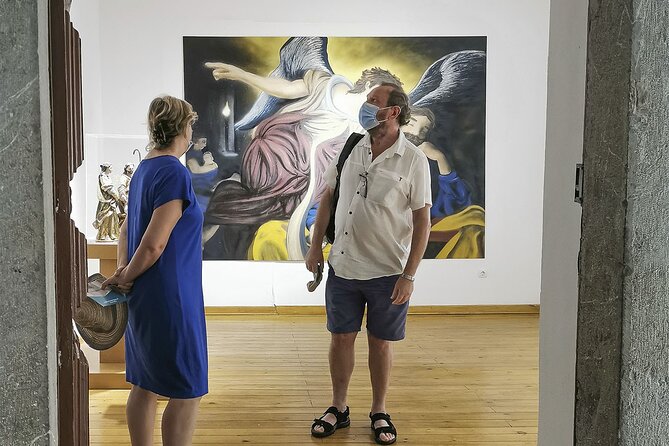
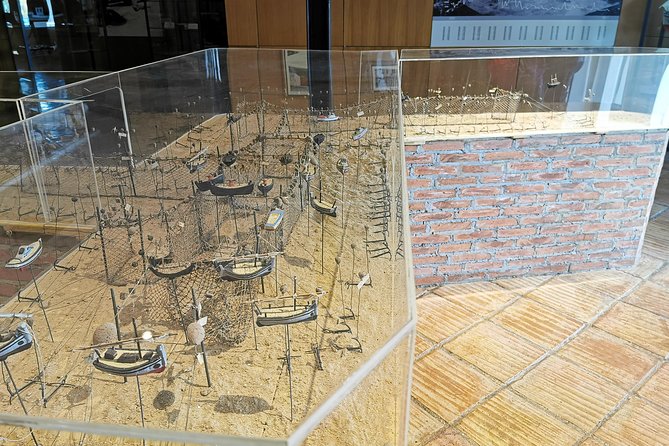
The final theme shift is to the old fishing village area, described as where tuna fishing trap elements are found. On the way there, you pass Forte do Rato and Forte de Santo António de Tavira, then arrive at the Tuna Fishing Museum Center.
The museum visit is about 10 minutes, and the admission is listed as free. Ten minutes is not a slow museum stroll, so the value here is different. It’s not about reading every label cover to cover. It’s more like a guided “starter course” on how tuna fishing shaped life here.
This is also where the tour’s structure makes sense. You’re not just going to a museum because it’s famous. You’ve already seen the salt flats and the regional logic, so the museum becomes easier to place in your mental map. When you understand salt flats plus fishing village, Tavira feels more like one story than separate stops.
If you want more museum time, plan to return later on your own. But for a 2-hour tour, this museum stop is a strong thematic anchor.
Price and time: is $63.38 per person good value?
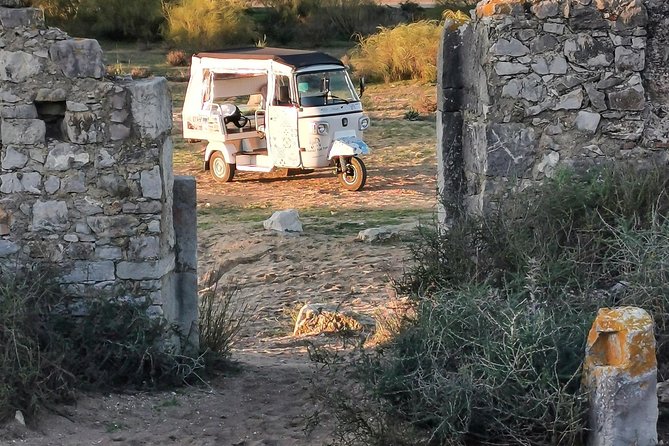
Let’s talk money with your time in mind. At $63.38 per person for about 2 hours, you’re paying for:
- an electric tuk tuk ride (not just walking),
- a guided route through multiple city landmarks,
- and listed free admission stops like the salt flats, the Ermida de São Sebastião, the Tuna Fishing Museum Center, and the forts.
That makes the price easier to justify if you’re short on time or you don’t want to spend your day bouncing between scattered locations by yourself. You also get a private group setup, and that can matter for comfort—less waiting, easier conversation, and a better shot at getting specific answers.
Where the value may feel weaker is if you’re an independent explorer who likes to linger. Since many stops are around 5 minutes, you’ll likely feel the tour is guiding you through the highlight reel rather than letting you fully settle in at any one spot.
Who this tour suits best (and who should think twice)
This is a great fit if you:
- want a fast orientation in Tavira,
- prefer light walking,
- like getting explanations while moving between landmarks,
- and you’re curious about how the area connects salt production and tuna fishing.
It’s not ideal if you:
- need long museum time,
- prefer a slow, unstructured day,
- or you’re hoping to spend a lot of time inside churches or on detailed self-guided exploration.
That said, the stop design can still help you. Even if you don’t finish exploring everything during the tour, you’ll know where to return.
What to expect from the guides (based on past experiences)
The standout theme from guide feedback is how quickly they make Tavira understandable. I’ve seen the names Lauri and João come up with strong praise for enthusiasm and for adapting the time spent at stops to fit what you want to see.
That matters on a route like this, because the vehicle moves you along, but the guide controls what you notice. If you want more photos, you usually can ask. If you want a bit more explanation at a church square or bridge, it helps to have a guide who can adjust the pace without turning it into chaos.
Quick practical tips before you ride
Bring what you’d bring for short-city sightseeing: water, sunscreen, and comfortable shoes even if you’ll be on a tuk tuk. Some stops are only 5 minutes, so you don’t want to waste time digging around for things you need right away.
Also, keep your camera ready during the drive passes. The route includes several “see it from here” moments like the Roman Bridge area and castle/fort viewpoints. Many of the best shots happen just before the vehicle stops.
Finally, if you want the best use of your time, treat this as your orientation tour. After that, use what you learned to pick one or two areas to revisit on your own.
Should you book Tuk tuk Tour Tavira Total?
I’d book this if you want an efficient, guided overview of Tavira’s major landmarks plus the salt flats and tuna-fishing story, all in about 2 hours and on a 100% electric tuk tuk. The price feels reasonable because you’re not only paying for transport—you’re paying for a route that strings together the pieces of Tavira into a coherent picture.
I would skip it if you’re seeking long stops, deep museum time, or a relaxed “wander and discover” day. In that case, you may do better with independent walking plus a self-guided museum visit.
FAQ
How long is the Tuk Tuk Tour Tavira Total?
It lasts about 2 hours.
What’s included on the tour?
The tour includes a ride through Tavira with stops at the salt flats, the old fishing village area, and a visit to the Tuna Fishing Museum Center, plus passes and stops at major historic sites and churches.
Is the tour in an electric tuk tuk?
Yes. The excursion is described as being carried out in a 100% electric tuk tuk.
Does the tour offer pickup?
Pickup is offered.
Where does the tour start?
The meeting point is R. Gonçalo Velho 7, 8800-349 Tavira, Portugal.
Is the Tuna Museum admission included?
Yes. The visit to the Tuna Fishing Museum Center is listed with admission ticket as free.
Can I cancel for a refund?
Free cancellation is available up to 24 hours in advance for a full refund.
Is this tour private?
Yes. It’s listed as a private tour/activity, so only your group will participate.
Are service animals allowed?
Yes, service animals are allowed.