REVIEW · INARI MUNICIPALITY
Arctic Fishing & Open Fire Cooking
Book on GetYourGuide →Operated by Xwander Nordic · Bookable on GetYourGuide
Ice fishing and open-fire cooking feel ancient. At Rahajärvi near Ivalo, you drill through the ice, try classic Lappish methods, and finish by open-fire cooking with your own catch.
I love the hands-on pace—holes in the ice, real attempts at line and net fishing, then food right away. I also love that the meal is warm and made from fish pulled from the lake minutes earlier. The one real consideration is cold: winter weather changes quickly, so you’ll want windproof layers and a plan for staying comfortable outside.
Try three traditional ice-fishing techniques
Catch and cook fish the same day
Campfire meals keep you warm between fishing breaks
Guides teach you step-by-step, even with kids
A real taste of northern cooking (soups, stew, marshmallows)
In This Review
- A Day at Rahajärvi: Traditional Lappish Ice Fishing Meets Fire-Cooked Fish
- Meeting at Eräsoppi (Ivalontie 12) and Getting to the Lake on Time
- Kairaaminen, Pilkkiminen, Juomustus: Three Ways to Fish Through the Ice
- Drilling holes (kairaaminen)
- Ice fishing with a line (pilkkiminen)
- Net fishing under the ice (juomustus)
- The real takeaway
- Open Fire Cooking: Turning Your Catch into a Warm Meal
- What the Food Tastes Like in the Cold (and Why It Matters)
- Timing, Group Size, and Languages: Making the 5 Hours Work
- Price and Value for $167: What You’re Really Paying For
- Practical Tips: Clothing, Cameras, Snacks, and Staying Warm
- Who Should Book This Arctic Fishing Trip (and Who Might Hesitate)
- Should You Book It? A Decision Guide
- FAQ
- Where do we meet for the Arctic Fishing and Open Fire Cooking trip?
- How long is the trip?
- Is pickup included?
- What’s included in the price?
- Do you provide winter clothing?
- What languages are the guides?
A Day at Rahajärvi: Traditional Lappish Ice Fishing Meets Fire-Cooked Fish
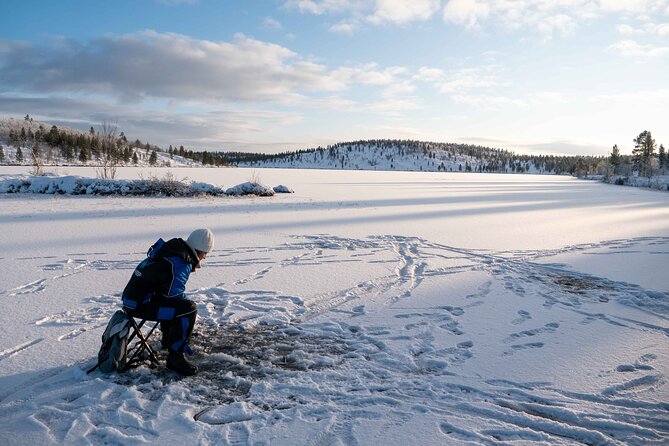
There’s something wonderfully simple about this trip: you go out on the ice, you fish, and then you eat what you caught around a fire. It’s not a museum day. It’s active, practical, and very outdoorsy.
The big idea here is learning how people in Lapland used to fish in winter—before gadgets took over. You’ll drill holes, fish the usual way with a line, and also try net fishing under the ice. Then you’ll cook the catch on an open fire. It’s the kind of loop that makes the day feel complete: effort, results, warmth.
What makes it especially appealing is the way the food fits the day. You don’t just get a snack and go home. You get a proper campfire meal experience—warm enough to make the cold feel manageable, and tasty enough that you’ll understand why fresh northern fish matters.
The setting helps, too. Rahajärvi near Ivalo is cold and clear water country, which means fish quality can be excellent. When you’re eating something you pulled from the lake yourself, that freshness isn’t just a marketing line—it’s part of the fun.
Meeting at Eräsoppi (Ivalontie 12) and Getting to the Lake on Time
You start at 10:00 from the Xwander shop at Eräsoppi, Ivalontie 12. I strongly recommend arriving by 9:45. That buffer matters because winter days move fast: layers need adjusting, gloves need finding, and you’ll want a few minutes to get your bearings before the car ride to Rahajärvi.
If you’re staying in Ivalo, pickup is complimentary. For Inari, Nellim, Saariselkä, and Kiilopää areas, you’ll need to contact the operator ahead to arrange a transfer. This matters if you’re planning an itinerary—try not to schedule anything right before or after without padding.
Once you’re in motion, expect the day to feel outdoorsy immediately. You’ll trade shop warmth for lake air. Even with a short ride, the change in temperature is noticeable, so give yourself time to settle in.
One more thing to plan around: the tour runs about 5 hours, with return around 15:15. That’s long enough to learn and try multiple methods, but short enough that most people can handle it without turning the day into a survival test.
Kairaaminen, Pilkkiminen, Juomustus: Three Ways to Fish Through the Ice
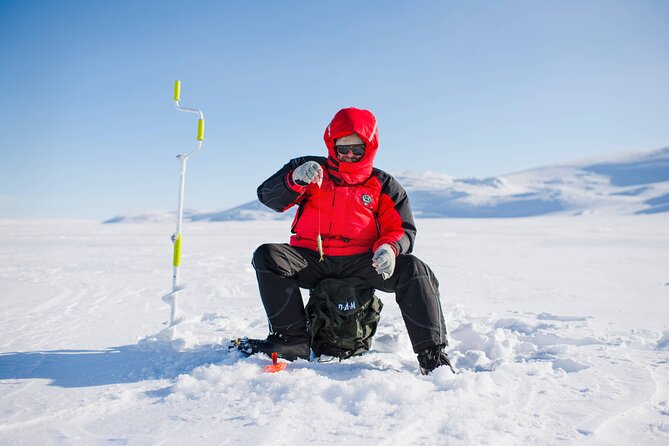
This is where the experience turns from pretty to memorable. Instead of doing just one fishing style, you rotate through several traditional approaches. The goal isn’t just to say you fished—it’s to understand the logic behind how winter fishing works.
Drilling holes (kairaaminen)
You’ll start by drilling holes through the ice. In Finnish this is kairaaminen, and yes, it’s work. It can take time, especially if the ice is thick or conditions are windy. That’s part of why the guides matter. They show you the technique and keep things moving so you’re not stuck with a tool you don’t know how to use.
Practical tip: dress for a task like this. If your sleeves ride up or your gloves get damp, you’ll feel it fast once you’re leaning over the ice.
Ice fishing with a line (pilkkiminen)
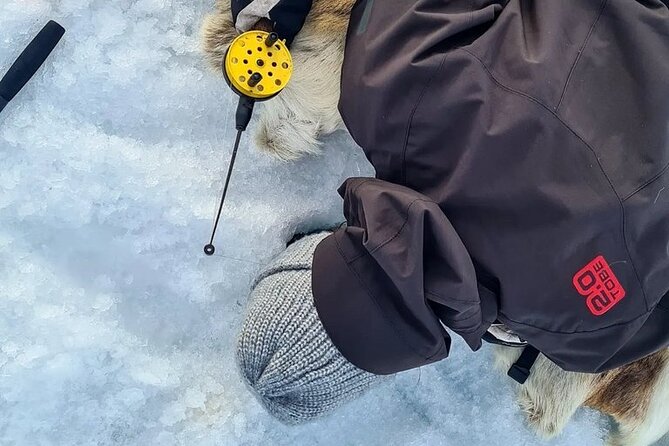
Once holes are ready, you move into pilkkiminen—ice fishing with a line. This is the patient part of the trip. You watch, adjust, and learn what to look for through the hole.
Even if you’ve fished before, winter changes everything: you’re fishing in a small opening, in cold air, with everything slowed by the environment. Guides help you understand how to set up and how to read what’s happening.
Net fishing under the ice (juomustus)
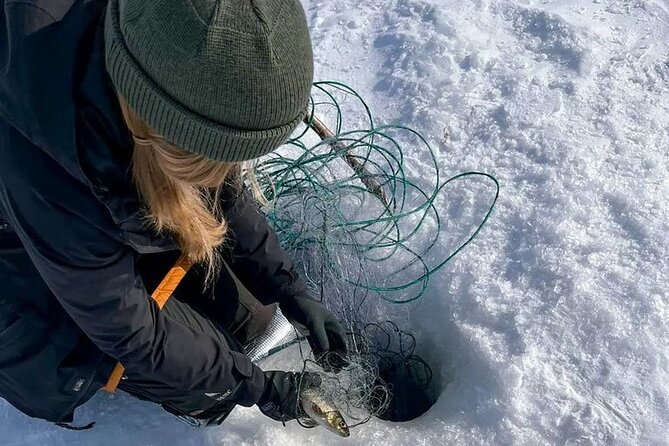
Then you try juomustus, net fishing under the ice. This part stands out because it’s different from line fishing. You’re working with another method and getting a different feel for the lake’s rhythm.
In past groups, this rotation has worked well for families, including kids and grandparents. The older crowd often appreciates that the methods create variety. The kids like the action of switching tasks and the sense that something is always happening.
The real takeaway
By the end, you won’t just have a pile of gear tricks. You’ll understand why winter fishing uses multiple methods and how each one fits the conditions. That knowledge makes the day feel like a genuine cultural experience, not just an activity package.
Open Fire Cooking: Turning Your Catch into a Warm Meal
The best part of ice fishing is the moment you stop fishing and start warming up. After you’ve been on the ice, you move into cooking mode.
You’ll make fire and cook your catch using open-fire methods. Everything for cooking and eating is provided: cooking equipment and table wear, plus safety equipment. So you’re not juggling survival gear along with fishing gear.
In terms of what you’ll actually eat, groups have raved about a few specific items:
- Salmon soup served by the fire
- A creamy fish stew made with bread and fish
- Marshmallows roasted at the campfire
Those details tell you something important: the campfire isn’t just for ambience. It’s for real food, real warmth, and that cozy rhythm where you finally slow down.
If you’re wondering whether you’ll get to taste your own catch, the answer is yes—your fish is cooked and served after fishing. When the meal comes from what you caught, the whole day clicks into place.
Also, the day tends to end in a more relaxed setup near the fire—people gather, compare techniques, and eat while the cold stays outside. It’s a great contrast to the focused work on the ice.
What the Food Tastes Like in the Cold (and Why It Matters)
Cold air changes everything about food. On an ice day, even plain food becomes meaningful because you’ve burned energy and you’ve waited for warmth.
Fresh northern fish matters here, too. The waters are cold and clear around this region, and the fish is described as super delicious because it’s fresh. In practice, freshness is what you notice first: the flavor comes through clean, and you’re not eating something that tastes like it traveled too far.
Then there’s the cooking style. Open-fire cooking has a different character than indoors heating. You get that campfire smell, plus the comfort of a hot bowl or a warm stew while you’re still thinking about your fishing hole.
And yes, roasting marshmallows is a small detail, but it makes sense. You go from drilling and fishing into something playful. That blend—serious outdoors work followed by comfort food and a sweet finish—keeps the day from feeling like a single long chore.
If you’re traveling with kids, this is one of the best reasons to choose this trip. Kids don’t just want rules. They want a story. Fishing gives the story. The campfire food and marshmallows give the ending.
Timing, Group Size, and Languages: Making the 5 Hours Work
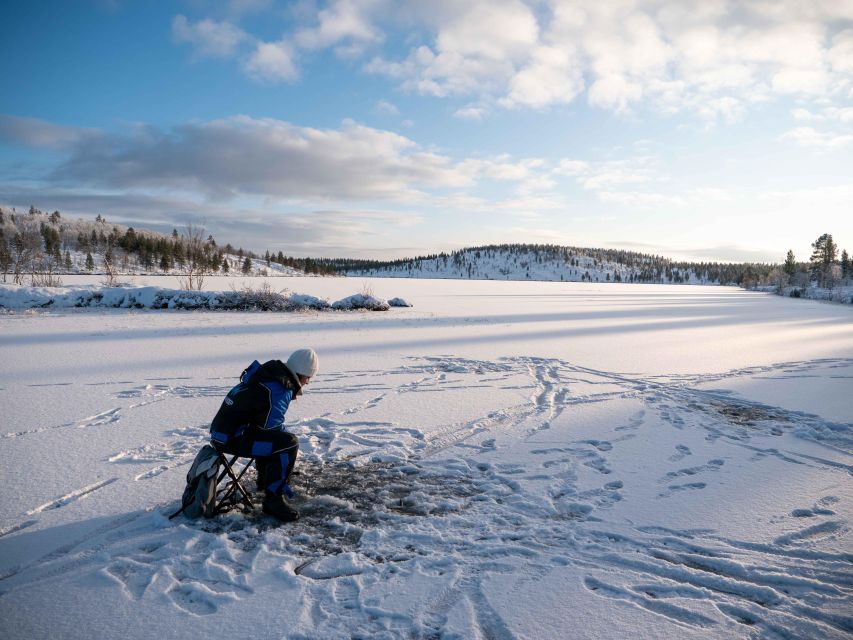
The trip runs about 5 hours. You’re out starting 10:00 and you’re back around 15:15. That timing is ideal for a day where you want real outdoor time without losing your entire afternoon to logistics.
The operator runs the experience with a minimum of 2 participants, which helps keep things flexible while still ensuring the activity has enough momentum.
Your guide speaks Finnish, English, and French. That’s a big practical plus. You’ll actually understand what you’re doing on the ice—not just follow instructions while hoping the right thing happens.
One guide name shows up in feedback: Julian. People thanked him specifically for cooking fish when net fishing and for guiding the group through the day. That’s a good clue that the teaching part is taken seriously: guides don’t just hand you a line and walk away.
From a comfort standpoint, 5 hours outdoors can still be a lot in winter. The plan works best if you dress correctly and accept that you’ll feel cold between warm-up moments. The campfire meal helps, but you still need to be prepared for real outdoor exposure.
Price and Value for $167: What You’re Really Paying For
At $167 per person for a 5-hour experience, you’re paying for more than just “fishing + food.” You’re paying for:
- Transport support to the lake (at least via the included car ride from the shop)
- Guided instruction in multiple traditional fishing methods
- Safety equipment
- Cooking and table wear
- The open-fire meal using fish from the lake
This is how the value adds up. If you tried to copy the day yourself, you’d likely spend time and money figuring out where to go, how to fish in winter safely, and how to cook outdoors with the right setup. Here, the operator handles the key pieces so you can focus on the experience.
The price also makes sense because you’re not just eating; you’re participating in catching and cooking. That catch-to-campfire loop is the core value. It turns a winter outing into something you’ll talk about later because you were part of every step.
If you’re only looking for passive sightseeing, this might feel like too much work. If you want hands-on Lapland and you’re comfortable being outside, it’s a strong buy.
Practical Tips: Clothing, Cameras, Snacks, and Staying Warm
The activity is straightforward, but winter conditions can vary a lot and change quickly. You’ll want to treat this like a serious cold-weather outing.
Bring:
- Warm clothing
- Camera
- Snacks
- Water
The listing also notes winter can vary and you should wear warm, windproof clothing. That’s not optional advice. Wind makes everything colder. If your outer layer isn’t windproof, the cold will creep in while you drill, lean, and wait.
A smart approach is to dress in layers so you can vent when you’re working and re-insulate when you’re waiting. You’ll be moving on the ice, then standing around the holes, then cooking by the fire. Your body temperature will swing.
Camera tip: plan for cold hands. If you have a phone, consider keeping it in an inner pocket until you’re ready to shoot. Batteries also drain faster in cold weather.
Snacks and water are useful because the day is active. Even with a meal included, you might want a little extra fuel between the ice and the campfire.
Who Should Book This Arctic Fishing Trip (and Who Might Hesitate)
This experience is best for people who enjoy hands-on activities and want a real winter day outside, not a seated tour. It also fits families well. Past groups included young kids and grandparents, and the guides explained everything in detail while helping with children during the day.
You should also consider it if you care about learning practical local skills. Drilling holes, fishing with a line, and trying net fishing under the ice each teach a different part of winter fishing logic.
You might hesitate if:
- You hate cold exposure and don’t have strong windproof winter layers
- You prefer very easy, low-physical-effort outings
- You’re uncomfortable with hands-on tasks like drilling and handling fishing methods
No matter what, the campfire meal makes the hard parts feel worth it.
Should You Book It? A Decision Guide
Book it if you want a winter day in Finnish Lapland that’s active, authentic, and ends with a warm, satisfying meal made from your own catch. The value is in the full loop: you learn methods, you fish, and you cook over an open fire with the guide’s support.
Skip it if you’re looking for a mostly indoor or short-and-comfy experience. This is outdoors time first, comfort later—just in a thoughtful order that keeps you moving toward warmth.
If you’re traveling with kids, or with a mixed-age group, it’s especially promising because the day has multiple tasks and clear guide help. Just show up properly dressed and treat the cold as part of the activity, not a surprise.
FAQ
Where do we meet for the Arctic Fishing and Open Fire Cooking trip?
You meet at the Xwander shop at Eräsoppi, Ivalontie 12, and you should arrive by 9:45 for a 10:00 start.
How long is the trip?
The total duration is about 5 hours, with a return around 15:15.
Is pickup included?
There is a complimentary pickup service for Ivalo. For Inari, Nellim, Saariselkä, and Kiilopää, you need to contact ahead to book a transfer.
What’s included in the price?
The trip includes open fire food, cooking equipment and table wear, and safety equipment.
Do you provide winter clothing?
Winter clothing is not included, so you’ll need to bring your own warm and windproof layers.
What languages are the guides?
The live tour guide speaks Finnish, English, and French.