REVIEW · NEGOMBO
From Negombo: City Tour & Fishing Village Tour by Tuk-Tuk
Book on GetYourGuide →Operated by Sign of Lanka (Pvt) Ltd · Bookable on GetYourGuide
Fish nets and dragon mouths set the tone. This 4-hour Negombo tour mixes a working-coast city morning with major religious and colonial sites, and I love how it starts at the Lellama seafood market where you can watch the day’s catch come in. I also love ending at Angurukaramulla Temple, especially the dragon-mouth entrance and that mossy old library ruin you’ll see inside the grounds.
Do note one possible snag: on major holidays like Good Friday, the fish market may be closed, so your guide needs to adjust the plan on the spot. The good news is that a solid English-speaking guide can usually compensate with other nearby stops so your morning still feels full.
In This Review
- Key things to know before you go
- Entering The Morning at Lellama’s Catamarans and Fish Market
- St. Mary’s Church and the Sri Lankan Christian Story You’ll Actually See
- The Art and Devotion of Sri Singama Kali Amman Kovil
- Hamilton Canal: 14.5 Km of British-Era Planning
- Negombo Dutch Fort: Portuguese Origins, Dutch Shape
- Angurukaramulla Temple: Dragon Mouth Energy and a Mossy Library Ruin
- How the Tuk-Tuk Route and 4-Hour Timing Really Feels
- What the English Live Guide Adds (And How It Helps on Holidays)
- Price and Value: What $40 Includes in Real Terms
- Who This Negombo Tour Suits Best (And Who Might Want Something Else)
- Should You Book This Negombo Tuk-Tuk City Tour?
- FAQ
- What’s the duration of the Negombo City Tour & Fishing Village Tour by Tuk-Tuk?
- When does the tour start and how does pickup work?
- What are the main stops during the tour?
- Is there an English-speaking guide?
- Are entrance fees included?
- What’s included in the price besides transportation?
- What should I bring with me?
Key things to know before you go
- Lellama seafood market: watch catamarans and fishermen at work before the day gets too hot.
- Christian + Hindu landmarks: St. Mary’s Church and Sri Singama Kali Amman Kovil sit side-by-side in the route.
- Colonial-era stops: Negombo Dutch Fort and Hamilton Canal highlight Portuguese, Dutch, and British influence.
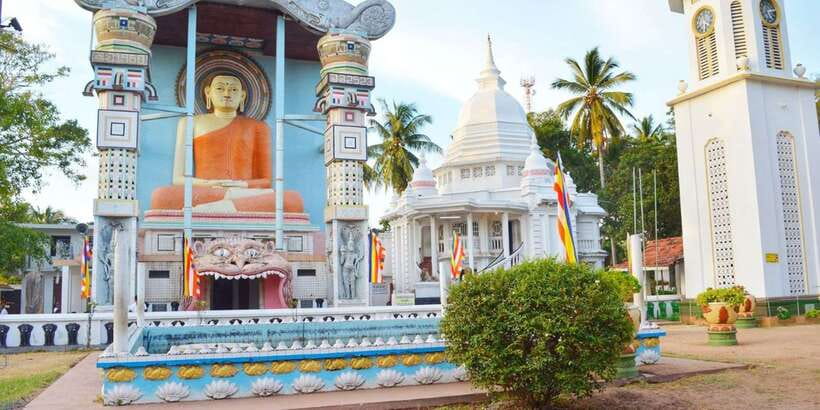
- Angurukaramulla Temple details: dragon-mouth entry and a 300-year-old moss-covered ruin of an ancient library.
- Tuk-tuk pace for 4 hours: enough time to see key sights, plus breaks for photos and short stretches.
- English live guide: guides like Samantha, and drivers such as Fernando and Simon (from past groups), help keep things clear and relaxed.
Entering The Morning at Lellama’s Catamarans and Fish Market
Most Negombo tours start with a grab bag of stops. This one starts with something more practical: the fishing trade itself. Right after pickup, you head to the Lellama seafood market, where you can see catamarans and local fishermen bringing in the day’s catch.
I like this opening because it grounds the whole trip. When you later pass colonial buildings and churches, you can connect the dots: this city’s importance wasn’t just about religion or politics, it was about shipping, work, and coastal life.
If you’re picky about photos, go for the early light. The market gets more crowded as the morning moves on, and you’ll have a better shot before everything turns into a blur of hands, baskets, and weighty fish.
You can also read our reviews of more tours and experiences in Negombo.

St. Mary’s Church and the Sri Lankan Christian Story You’ll Actually See
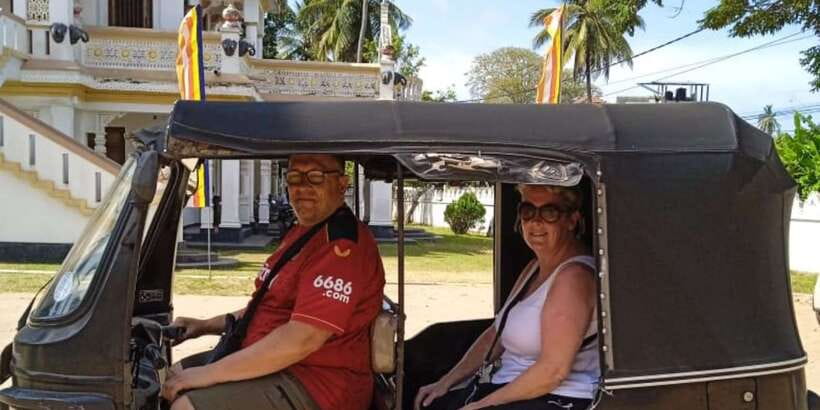
After the market, the tour moves to St. Mary’s Church, a key site for Negombo’s Christian heritage linked to Portuguese influence. The church construction resumed in 1874 and took until 1922 to complete, so it’s not just one uniform building story—you can sense different eras in what you’re looking at.
This stop works best when you pay attention to scale and details rather than treating it as a quick photo. Even in a short city tour, a church like this gives you a sense of how long communities have been shaping the neighborhood.
One practical note: it’s a religious site, so keep your voice low and dress neatly. You’ll enjoy the architecture more when you’re not rushing.
The Art and Devotion of Sri Singama Kali Amman Kovil
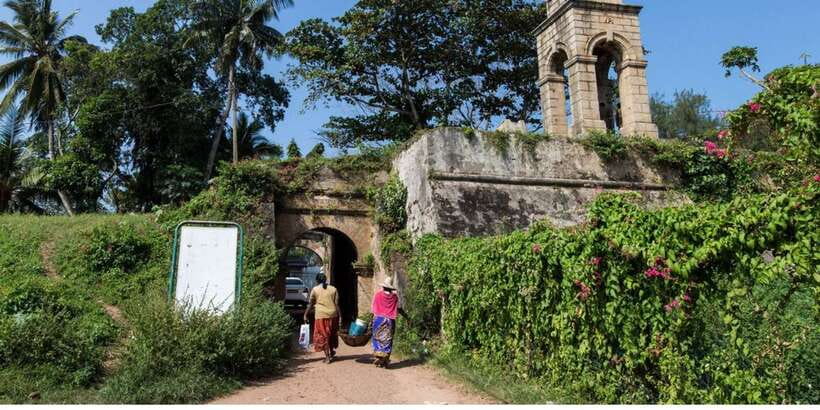
Next up is Sri Singama Kali Amman Kovil, a Hindu temple known for its murals and sculptural work. This is one of those places where the artwork isn’t decoration—it’s part of the spiritual language of the site.
What I like here is the contrast with the morning’s seafood market and the earlier church. You go from commerce to faith, from workboats to devotional art, all inside a tight timeline.
Look for what’s being emphasized in the murals and carvings. Even if you don’t know the symbolism, you can still appreciate the craftsmanship and the way people move through the space.
Hamilton Canal: 14.5 Km of British-Era Planning
Then you’ll head to Hamilton Canal, a 14.5 km waterway connecting Puttalam with Colombo. It was built by the British in 1802, and it played a role in transportation and trade—exactly the kind of practical infrastructure that helps explain coastal-city growth.
This stop feels more like a “see it, understand it” moment than a long wander. You’ll want a comfortable viewing position, take photos if it fits, and use your guide to translate what you’re seeing into why it mattered.
If it’s a warm day, give yourself permission to pace. You’ll likely have a couple of short breaks during the route, and using those breaks well makes the rest of the morning feel easier.
Negombo Dutch Fort: Portuguese Origins, Dutch Shape

A colonial city tour wouldn’t be complete without a fort, and Negombo Dutch Fort delivers. The fort was originally constructed by the Portuguese and later rebuilt into a pentagonal shape by the Dutch in the 1640s.
I find forts like this valuable because they’re physical evidence of who controlled trade and land at different times. Even if you only see parts of the structure, the shape and construction style give you a clue about defense priorities in that era.
Plan to spend a little time reading the space with your eyes. A fort isn’t just a wall—it’s a system designed for movement, sightlines, and protection, and your guide can point out the logic behind it.
Angurukaramulla Temple: Dragon Mouth Energy and a Mossy Library Ruin
The day’s emotional high point is often Angurukaramulla Temple. You’ll pass through the dragon-mouth entrance, which is believed to ward off evil spirits, and then you’ll see the famous 300-year-old moss-covered ruin of an ancient library within the temple grounds.
This stop works on two levels. Spiritually, it’s dramatic, with that entrance acting like a boundary between everyday life and sacred space. Visually, the mossy ruin creates a quiet contrast—old stone, worn surfaces, and that sense that time has been ticking along here for centuries.
If you enjoy photography, it’s worth taking a few minutes to adjust your angle. The dragon-mouth entry gives strong compositions, but the best shots come from getting positioned and waiting for a clear moment.
How the Tuk-Tuk Route and 4-Hour Timing Really Feels
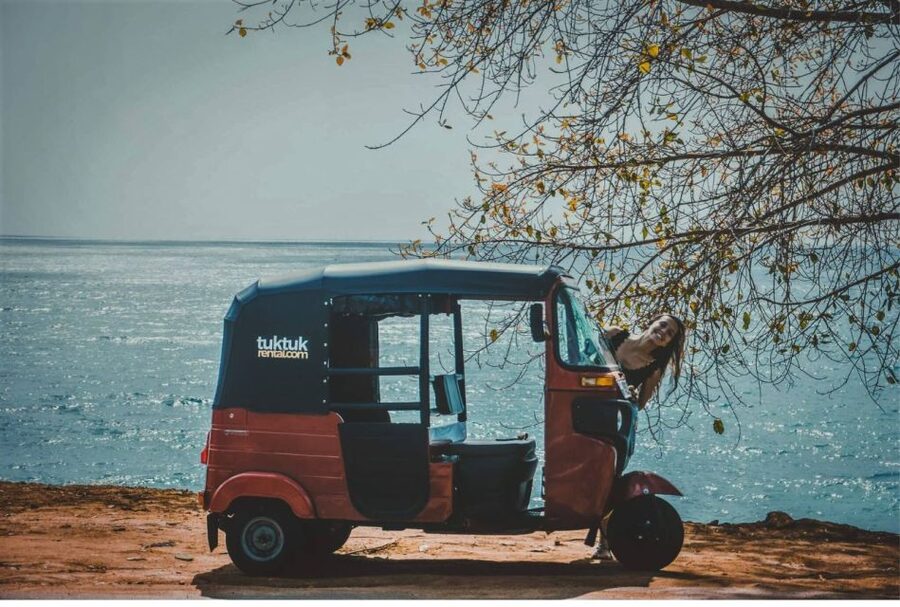
The tour runs about 4 hours, and it’s designed for a steady, short-stops pace. You get hotel pickup and hotel drop-off by tuk-tuk, with pickup options listed for Waikkal, Kammala, Negombo, Wattala, and Katunayake (and drop-off at Waikkal, Negombo, Wattala, Katunayake, and Kammala).
Along the way, you’ll have planned time for photo stops and short breaks. That matters because in the early morning you can handle walking and standing, but by late morning you’ll appreciate a pause—especially near religious sites where you may be waiting for people to move through.
Dress for humidity and sun. Light layers are smart, and shoes that handle uneven paths will keep you comfortable at temple grounds.
What the English Live Guide Adds (And How It Helps on Holidays)
A live English guide changes the value of a short city tour. Instead of just seeing buildings, you’ll understand why they’re there—like the British build of Hamilton Canal in 1802 or the Portuguese and Dutch connection at the fort.
On occasions like Good Friday, you might run into closures (the fish market can be one of them). The difference is whether your guide tells you early and adjusts the plan so your morning still feels balanced.
In past outings, guides such as Samantha have led groups, and drivers including Fernando and Simon have helped keep logistics smooth. Even if your crew is different, the takeaway is clear: choose this tour because it’s guided, not just transported.
Price and Value: What $40 Includes in Real Terms
At $40 per person for roughly 4 hours, the biggest question is always what’s covered. Here, you’re not just paying for a tuk-tuk ride.
Your package includes:
- Tuk-tuk transportation from hotel and back
- Entrance fees for the stops in the program
- Fuel and driver charges
- Parking fees
- Complimentary refreshments and water
- All government taxes
That mix is what makes the price feel fair. You avoid the common “surprise budget” issue where you add entrance costs on top of the tour price. You also get water and refreshment support, which is practical in a hot coastal city.
The only costs you’d likely handle are any personal expenses not covered in the package. So if you like a predictable plan, this one is set up for that.
Who This Negombo Tour Suits Best (And Who Might Want Something Else)
This is a strong choice if you want a tight route that hits both culture and context. You’ll like it if you enjoy religious architecture, colonial leftovers, and the working life of a coastal fishing city.
It’s also a good fit for first-timers who don’t want to arrange multiple transfers on your own. With the pickup/drop options around Negombo and Katunayake area, it reduces friction.
If you want long, slow wandering time at each site, you might feel a bit rushed. This tour prioritizes variety and getting around efficiently, not staying in one place for hours.
Should You Book This Negombo Tuk-Tuk City Tour?
Book it if you want a guided introduction to Negombo that’s built around real local life first—then layered with major churches, temples, canal history, and the Dutch Fort. The value holds because entrance fees, transportation, and even water are folded into the price, so you can focus on seeing.
Skip it or consider a different style of tour if you dislike holiday surprises or you want extended time in one major location. In most cases, a good English guide can adjust when closures happen, but the schedule will always be a short one by design.
FAQ
What’s the duration of the Negombo City Tour & Fishing Village Tour by Tuk-Tuk?
The tour lasts 4 hours.
When does the tour start and how does pickup work?
Pickup starts at 08:00 from your hotel. Pickup options include Waikkal, Kammala, Negombo, Wattala, and Katunayake.
What are the main stops during the tour?
You’ll visit Lellama seafood market, St. Mary’s Church, Sri Singama Kali Amman Kovil, Hamilton Canal, Negombo Dutch Fort, and Angurukaramulla Temple.
Is there an English-speaking guide?
Yes. The tour includes a live tour guide in English.
Are entrance fees included?
Yes. Entrance fees for the sightseeing places mentioned in the program are included.
What’s included in the price besides transportation?
Besides tuk-tuk transport and pickup/drop-off, the price includes fuel and driver charges, parking fees, complimentary refreshments and water, and all government taxes.
What should I bring with me?
Bring a charged smartphone and a passport or ID card (a copy is accepted).