REVIEW · ROVANIEMI
Snowshoeing Adventure with Ice-Fishing, Fire and Survival
Book on Viator →Operated by Nordic Odyssey · Bookable on Viator
Snowshoeing plus survival lessons sounds like winter magic. This 4-hour outing around Rovaniemi turns Lapland nature into a hands-on classroom, with map and compass skills you can reuse anywhere cold and wild. I like that the pace is geared for learning, so beginners aren’t left in the dust.
I also really like the full loop from forest to food: you’ll reach a frozen lake, drill an ice-fishing hole, and cook what you catch over an open campfire. On top of that, you get taught practical survival basics used in the Arctic, with a guide like Timo who focuses on how to do things, not just talk about them.
One thing to consider: this experience needs good weather. If conditions are poor, your day can be swapped or refunded, but plan to be flexible and dress for real cold.
In This Review
- Key Highlights Worth Your Attention
- Why This Rovaniemi Snowshoeing Lesson Feels Like Real Arctic Training
- Snowshoes, Silent Forests, and a Pace That Actually Helps You Learn
- Getting Oriented with Map and Compass in Lapland’s Whiteout-Friendly World
- Survival Skills: Fire-Starting, Local Tips, and How Guides Think
- The Frozen Lake Moment: Drilling an Ice-Fishing Hole
- Campfire Cooking and the Finnish BBQ Snack When Luck Doesn’t Hit
- Price and Value: What $150.03 Buys You in 4 Hours
- Meeting at Jaakonkatu 4-6: Simple Start, No Complicated End
- Small Group Size Means More Teaching Time (and Better Questions)
- Who Should Book This Snowshoe-and-Survival Tour
- Tips for Comfort So You Can Focus on Learning
- FAQ
- FAQ
- How long is the snowshoeing adventure?
- Where does the tour start and end?
- Is pickup available?
- How big is the group?
- Do I need prior experience snowshoeing or survival skills?
- What language is the tour in?
- What happens if the weather is bad?
- Should You Book This Lapland Survival Snowshoeing Tour?
Key Highlights Worth Your Attention
- Arctic navigation practice with a map and compass to help you find your way to the lake
- Survival skills built for real situations, including fire-starting and orientation tips
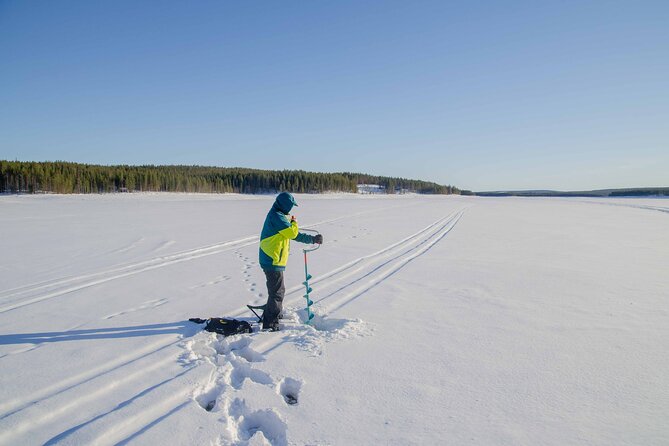
- Ice-fishing on a pristine frozen lake, followed by grilling fish by the fire if you catch one
- Local flora and fauna know-how for food and medicine-style tips shared on the walk
- Small group size (max 8) for more questions and faster help when you need it
Why This Rovaniemi Snowshoeing Lesson Feels Like Real Arctic Training
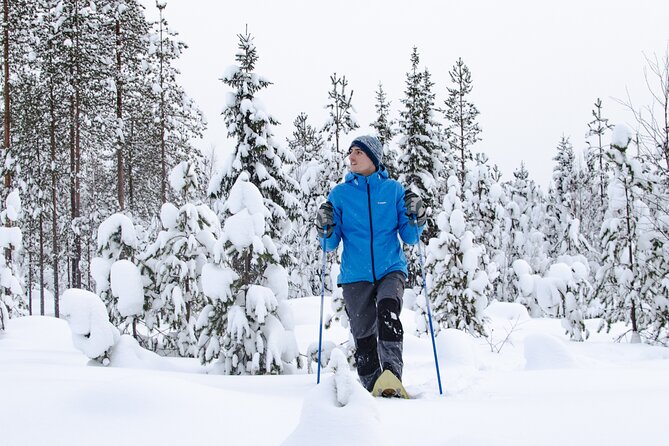
In Lapland, it’s easy to do a pretty winter walk and call it an adventure. This one is different. You’re not just observing snow and trees—you’re learning how people handle the basics of life outdoors when the environment is serious: cold ground, limited visibility, and the need for heat and food.
The best part is that the skills are tied to what you’re doing that day. You learn orientation tools while you’re moving through the snowy forest. You learn fire-making while you’re building your camp. Then you try ice-fishing because you’re already set up with a fire and a reason to cook.
And you’re not stuck with a huge crowd. With a maximum of 8 travelers, it’s much easier to ask questions, get feedback, and actually participate. The tour is offered in English, which keeps the instruction clear when you’re trying to pick up unfamiliar survival basics.
You can also read our reviews of more tours and experiences in Rovaniemi.
Snowshoes, Silent Forests, and a Pace That Actually Helps You Learn
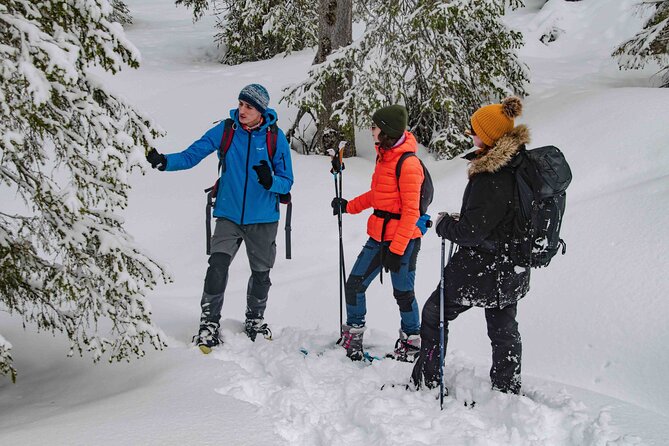
Snowshoeing is the vehicle here, but the point is competence. You’ll put snowshoes on and head into Lapland’s winter wilderness with an outdoor guide. The walk is designed so you can keep up while paying attention—because the survival and navigation parts work best when you aren’t rushing.
You’ll spend time moving toward the shore of a large frozen lake. Along the route, your guide shares survival-relevant nature tips—things you’d normally miss if you were just sightseeing. That matters because the Arctic survival lessons are based on reading the environment: how to find direction, how to think about heat, and what the local natural world can offer.
Practical takeaway: this is a good fit if you want activity plus instruction. It’s not a sit-and-watch activity where you only get the photos. You’ll be engaged the whole time, from the first steps to the firelight snack at the end.
Getting Oriented with Map and Compass in Lapland’s Whiteout-Friendly World
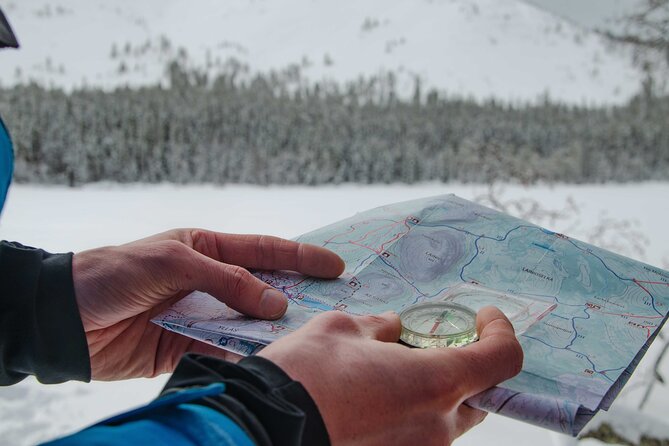
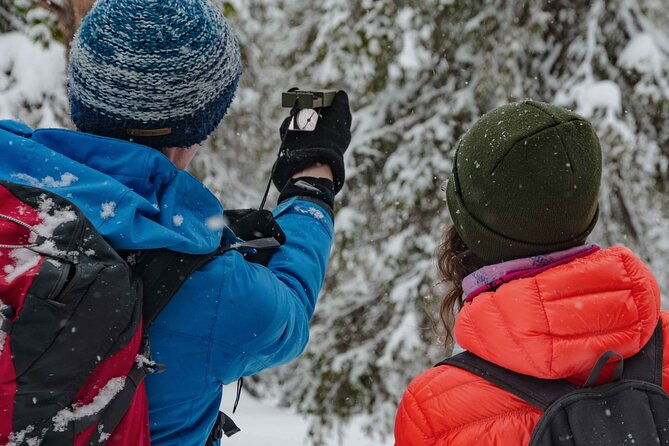
The navigation portion is the heart of the day if you care about real outdoors skills. Before you head fully out to the lake, you’ll learn how to use a map and a compass to orient yourself—so you can understand where you are and where you’re going, even when everything looks the same in winter.
What I like about this approach is that it’s not abstract. You’re not just shown tools and sent away. You’re using them to reach a specific destination: the shores of an immense frozen lake. That makes the learning stick, because you can connect each step of the process to a visible result.
Even if you’ve never held a compass before, the tour framing is clear: your guide helps you develop the basics needed for Arctic navigation. In a place where snow can flatten landmarks, knowing how to work with a map and compass is valuable beyond this one day.
Survival Skills: Fire-Starting, Local Tips, and How Guides Think
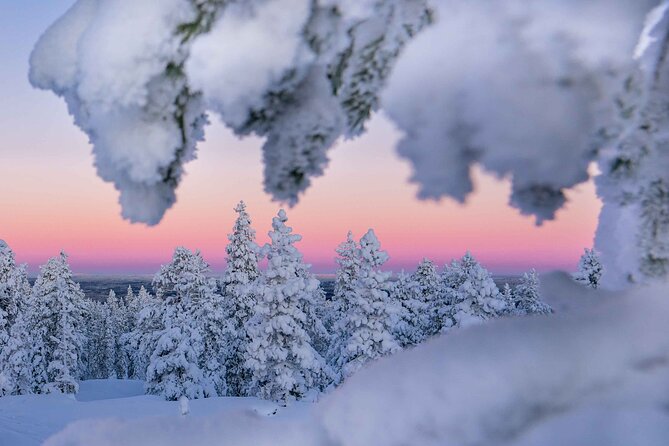
Once you’re out in the snowy wilderness, the survival lessons move from theory to action. You’ll hear and practice basics that Lappish cultures have long used in the Arctic. The focus isn’t just on survival movies—it’s on practical steps and thinking.
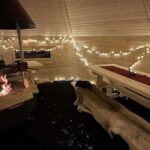
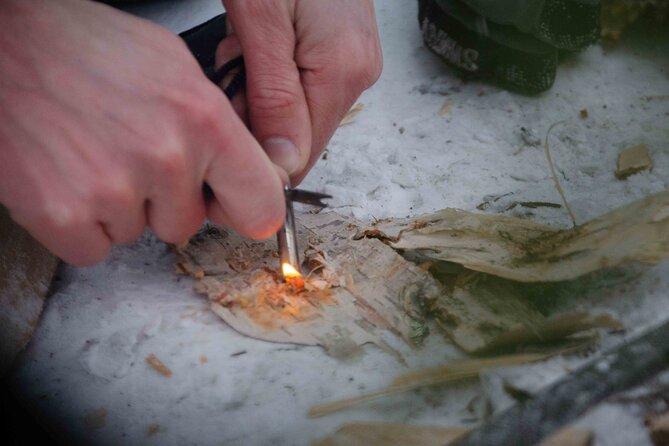
A major highlight is fire-making. You’ll learn how to start a fire using tools and natural materials your guide points out on the way. The goal is warmth and cooking, not dramatic fire tricks. In a group setting, this also becomes a confidence builder: you can see how everything connects, and you get help while you’re learning.
Along the route, your guide also shares tips on using local flora and fauna—including ideas for food and medicine. Even if you don’t plan to start self-treating anything (please don’t), these are fascinating lessons in how people traditionally looked at the surrounding natural world and how they made decisions based on what was available.
Balance check: survival skills can sound intense, but this tour keeps it human. You’re learning in a structured way, with your guide right there for course correction. And when the day is done, you’ll have a better mental model of how the Arctic environment shapes daily life.
The Frozen Lake Moment: Drilling an Ice-Fishing Hole
After the navigation practice, you reach the lake and shift gears. This is where the day turns from movement into stillness and focus.
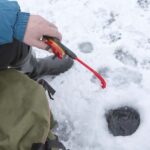
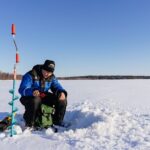
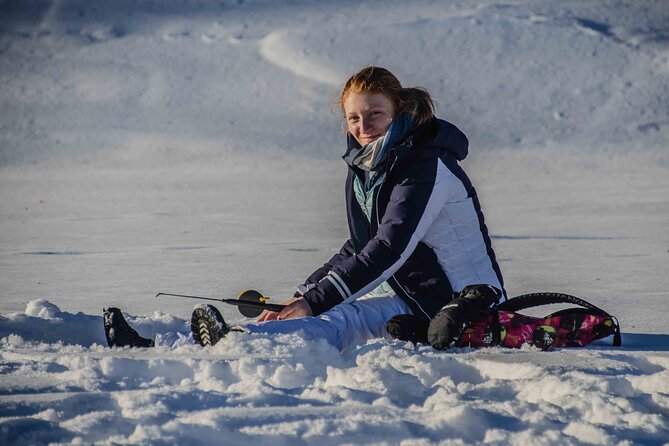
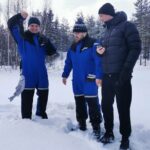
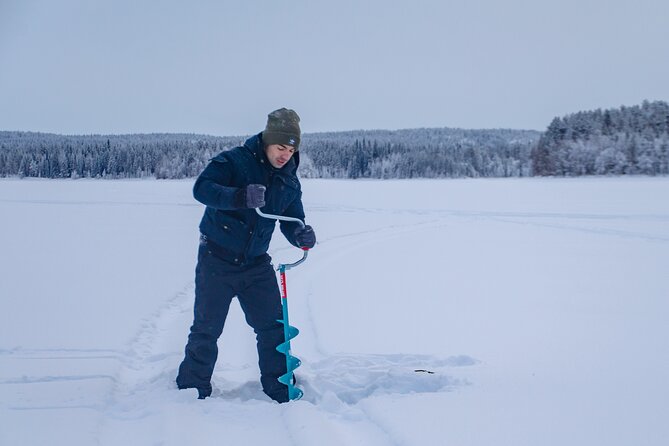
You’ll drill your own hole in the frozen lake and try ice-fishing. That’s a big part of what makes the experience feel complete—because you’re doing the work that sets up the meal, rather than arriving at a pre-made setup.
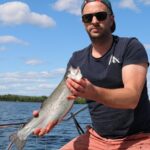
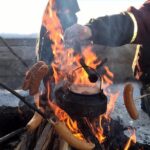
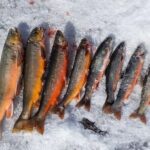
If you catch a fish, your guide will show you how to grill it over the open campfire you built earlier. Cooking in the Arctic isn’t just about taste. It’s also about heat management, patience, and understanding how to turn an outdoor find into something you can actually eat.
One practical consideration: ice-fishing depends on luck. Even with good instruction, the fish might not bite. That’s not a problem here—because the tour has a fallback plan.
Campfire Cooking and the Finnish BBQ Snack When Luck Doesn’t Hit
If you don’t catch a fish, you’re not sent back hungry or disappointed. Your guide will prepare a delicious Finnish barbecue snack around the campfire.
This matters for value and comfort. A snow adventure that includes food is one thing; a snow adventure that includes food regardless of ice-fishing results is better. You still get the warmth of the fire, the group feeling of sitting together, and the chance to ask questions.
And yes, you’ll use that camp time well. Around the fire, your guide answers questions about Lapland and the survival lessons you just tried. For many people, this is where the trip becomes more than tasks. You get context: how these skills fit the region, what traditions shaped them, and what you should remember if you ever try something similar on your own.
Price and Value: What $150.03 Buys You in 4 Hours
The price is $150.03 per person for about 4 hours, and it’s set up like an instructional small-group experience. That matters, because your cost isn’t just for snowshoes and a walk. You’re paying for guided skill-building: navigation with map and compass, survival teaching, and active ice-fishing that ties into camp cooking.
Here’s how I’d measure value:
- You get a full skill loop (navigation → fire skills → ice-fishing attempt → cooking time/food).
- You’re in a small group (max 8), which keeps instruction personal.
- Food is included, and there’s a backup snack even if fish don’t cooperate.
Also, it’s commonly booked in advance—around 40 days on average. That’s a hint that the timing you want may fill up, especially if you travel during peak winter dates. If you’re aiming for a specific time window, booking earlier usually saves stress.
Pickup is offered, and you’re near public transportation. That’s practical if you don’t want to figure out everything on your own before you even start learning.
Meeting at Jaakonkatu 4-6: Simple Start, No Complicated End
You’ll meet at Jaakonkatu 4-6 in Rovaniemi, and the tour ends back at the same meeting point. That makes logistics easier than tours that scatter you at different locations.
If you choose pickup, that can reduce hassle—especially in winter, when getting layered up and moving quickly can be harder than it sounds. Either way, you’ll have a clear starting location, and the activity provides a mobile ticket.
For me, this kind of straightforward start-and-finish is underrated. When the day involves cold and movement, simpler logistics make it more enjoyable.
Small Group Size Means More Teaching Time (and Better Questions)
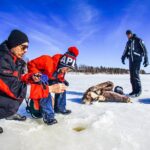
With a maximum of 8 travelers, the guide can spend time correcting technique. That matters for things like using a compass properly or getting fire-starting steps right. It also matters for ice-fishing, where you might need quick help understanding what you’re doing and how to adjust.
The group feel can be friendly and natural. For example, I’ve seen groups include families, and the instruction still works well with mixed ages when kids are curious and willing. One standout element is that you’ll learn orientation and fire-starting in a way that’s understandable, not lecture-heavy.
If you like asking questions and getting specific answers, this group size helps a lot.
Who Should Book This Snowshoe-and-Survival Tour
This tour is ideal if you want more than a winter walk and you enjoy learning by doing.
You’ll probably love it if:
- You’re visiting Rovaniemi and want a hands-on Arctic experience.
- You care about navigation basics with map and compass.
- You like campfire cooking and want to connect food to outdoor skills.
- You’re traveling with people who enjoy active tasks, even if they aren’t outdoors experts.
You might think twice if:
- You hate being outdoors in winter conditions even for a few hours.
- You want a strictly comfortable, low-movement experience.
- You dislike activities where luck affects whether you catch fish. (You’ll still get food either way, but ice-fishing is part of the theme.)
Tips for Comfort So You Can Focus on Learning
The tour requires good weather, so you’ll be outside. Dress for cold first, everything else second. That means layers that work together, warm outerwear, and winter-ready footwear.
Bring patience, not just expectations. Fire-making and ice-fishing are skills and activities, not guaranteed wins. The goal is participation and learning, not a perfect outcome.
Also, come ready to move. Snowshoeing works best when you keep moving and pay attention to your guide’s instructions. If you treat it like a casual stroll, you’ll miss some of the learning beats.
FAQ
FAQ
How long is the snowshoeing adventure?
It lasts about 4 hours.
Where does the tour start and end?
It starts at Jaakonkatu 4-6, 96200 Rovaniemi, Finland, and ends back at the same meeting point.
Is pickup available?
Yes, pickup is offered.
How big is the group?
The tour has a maximum of 8 travelers.
Do I need prior experience snowshoeing or survival skills?
No. The tour is adapted to every level, and most travelers can participate.
What language is the tour in?
It’s offered in English.
What happens if the weather is bad?
The experience requires good weather. If it’s canceled due to poor weather, you’ll be offered a different date or a full refund.
Should You Book This Lapland Survival Snowshoeing Tour?
If you want a winter day that actually teaches you something useful, I’d book it. The combination of map-and-compass orientation, survival-style fire skills, and the chance to drill and ice-fish makes it feel like a real Arctic skill experience, not a checklist of photos.
The only reason to hesitate is weather sensitivity. If you’re flexible and you’re comfortable dressing for cold, this is a strong value for an active, guided, small-group adventure in Rovaniemi.